
May 1, 2026
Let’s get this western Pennsylvania exploration on the road! After three days in Pittsburgh for a conference, along with visiting the Flight 93 National Memorial the day prior, I was ready to start checking items off the itinerary I had built. With a less-than-ideal weather forecast, I decided to get an early start to my day so I could savor some clear views on Pennsylvania’s high point, Mount Davis. I would then move onto Fallingwater (a UNESCO World Heritage Site), Ohiopyle State Park, Fort Necessity National Battlefield, Friendship Hill National Historic Site, and, if the weather was holding, Maryland’s state high point, Hoye Crest on Backbone Mountain.
Just typing that out makes me tired!
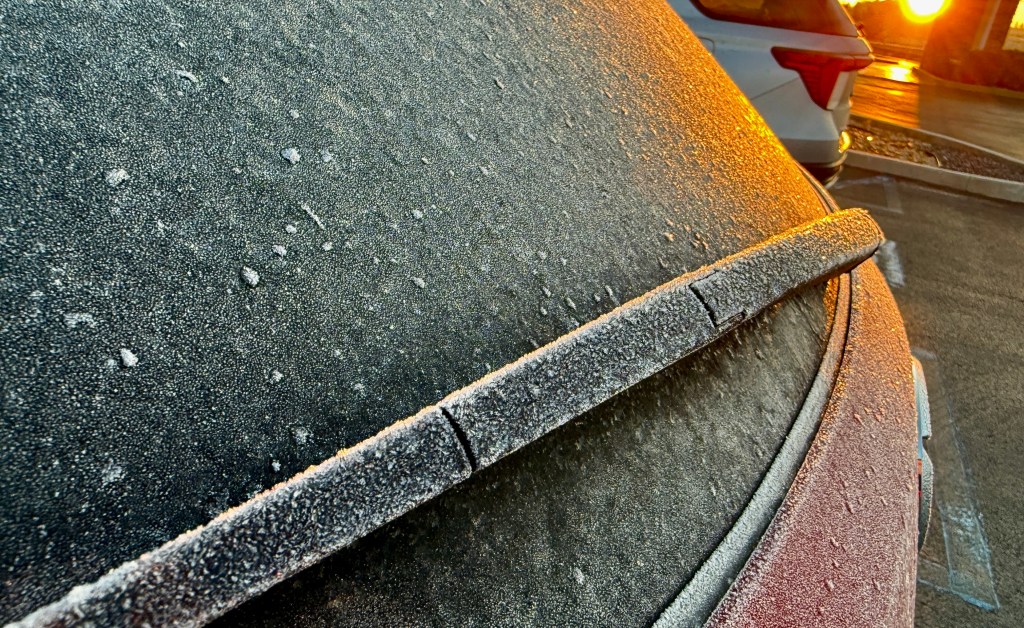
The frosty weather PA was experience took me by surprise on this trip, I was so happy I packed my puffy down jacket for the trip (but no hat and gloves… isn’t it spring?). A frost-covered car greeted me at sunrise in the hotel parking lot, and I took to scraping my windows for the first time all winter since Wyoming really did not have a winter (had to use my hotel room key of all things since the rental didn’t have a scraper in it).
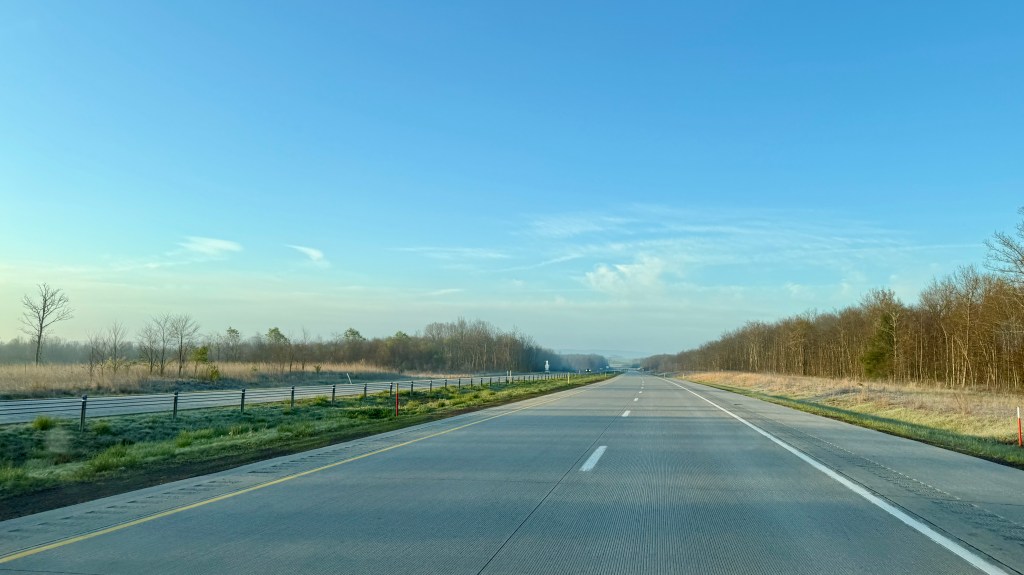
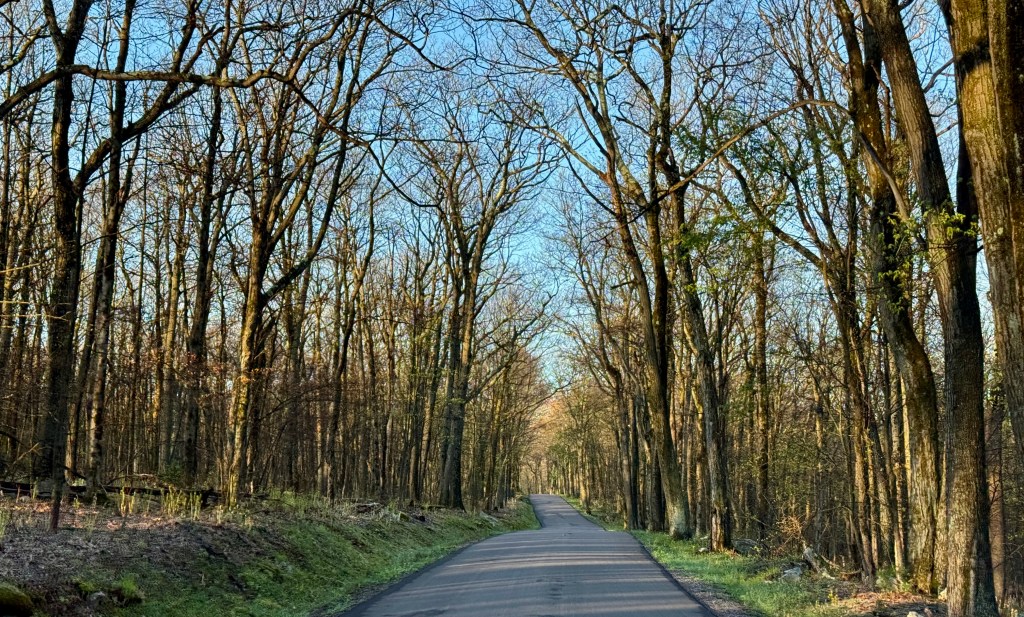
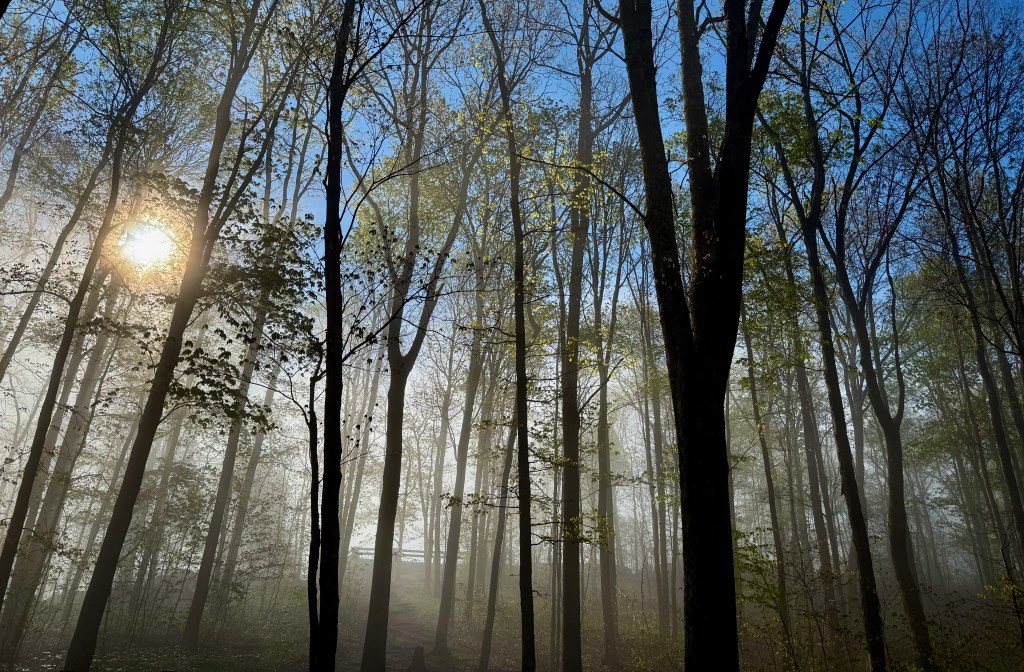
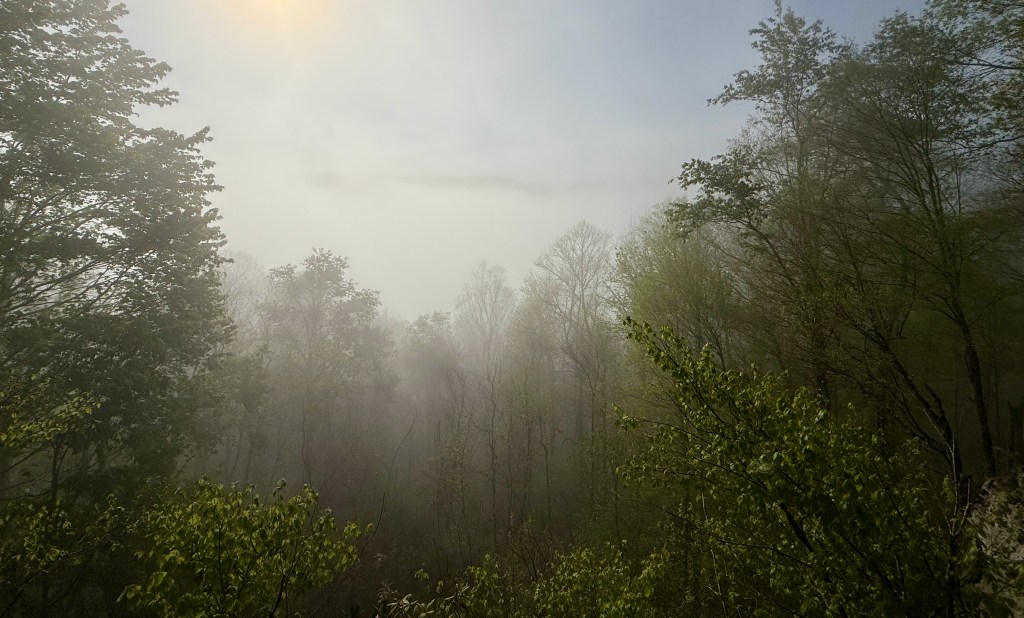
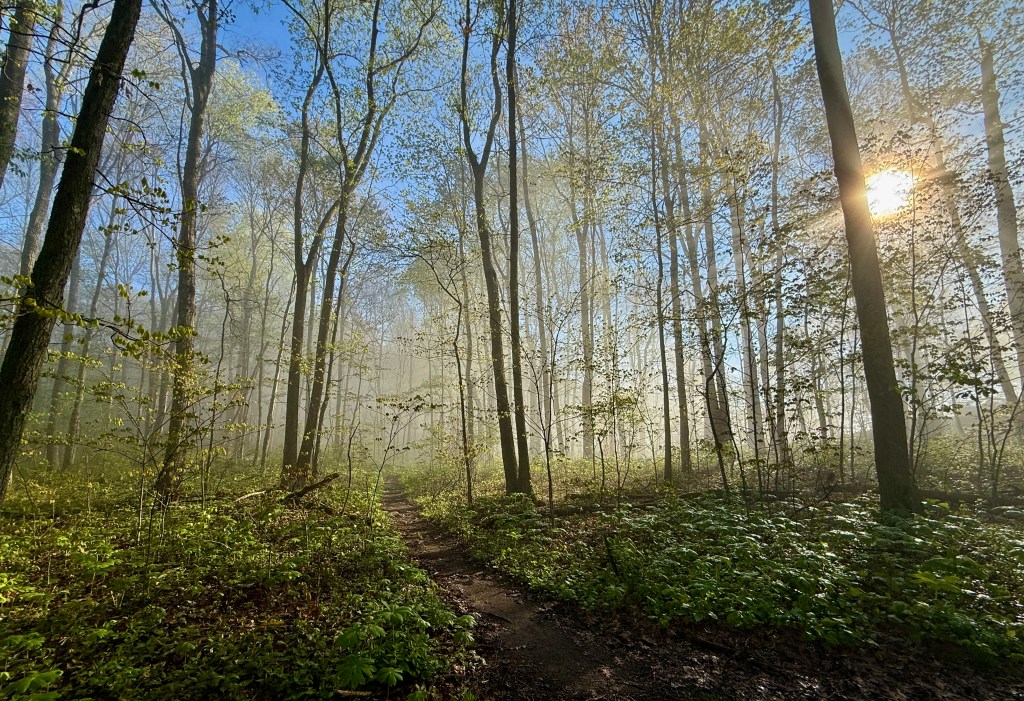
With a 9am grounds entry at Fallingwater and recent rains making everything a muddy mess, I opted to drive to the summit of Mount Davis instead of taking on the 2-ish mile hike to the summit. I enjoyed empty, winding country roads as the sun broke through morning fog. Have I lamented in this post yet about how it takes forever to drive anywhere on the east coast yet?!
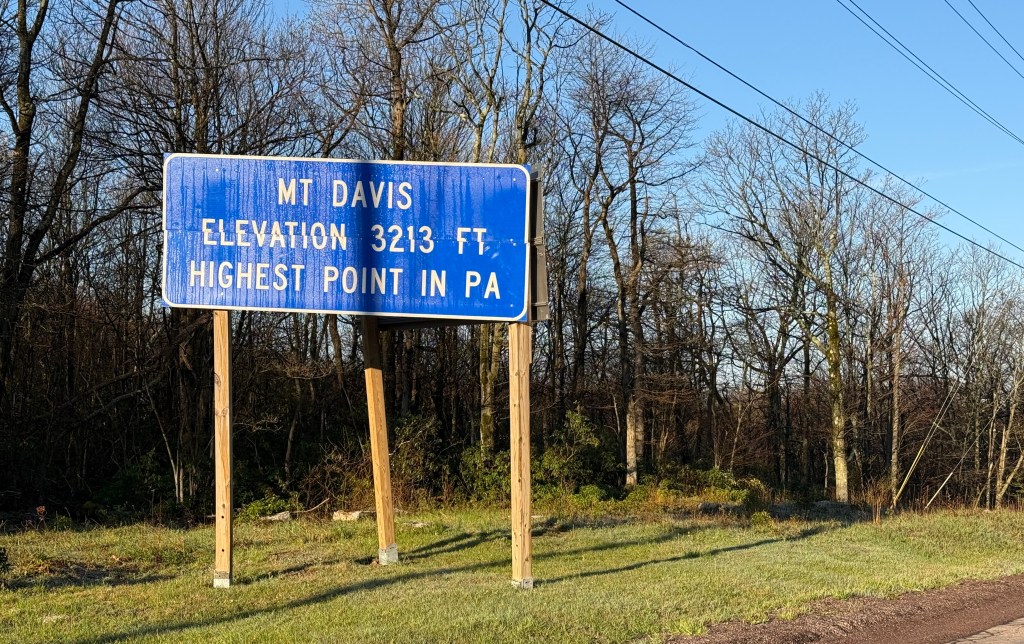
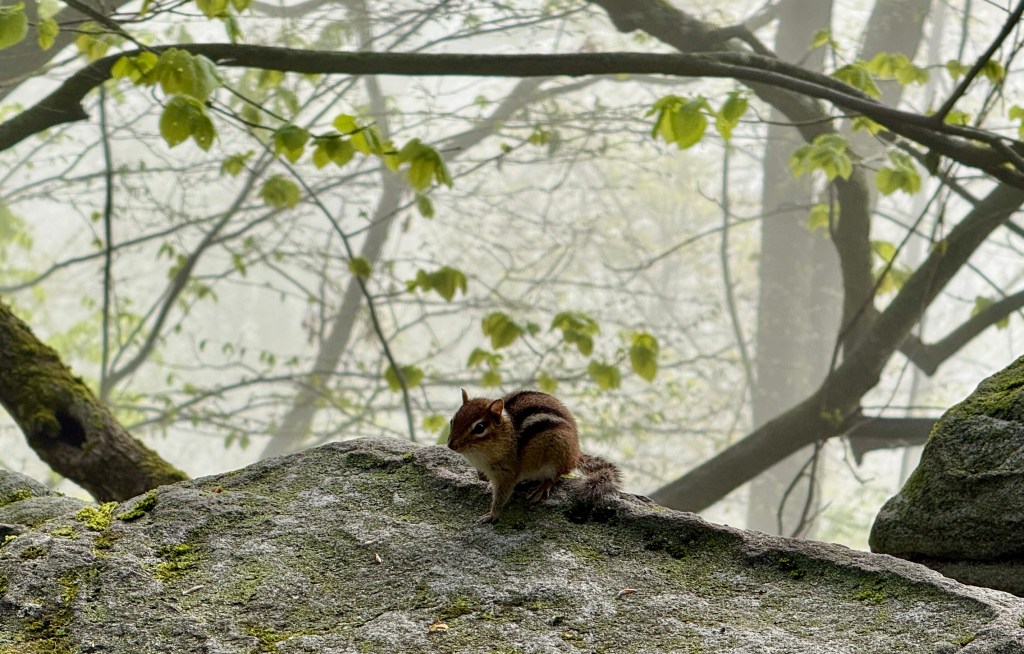
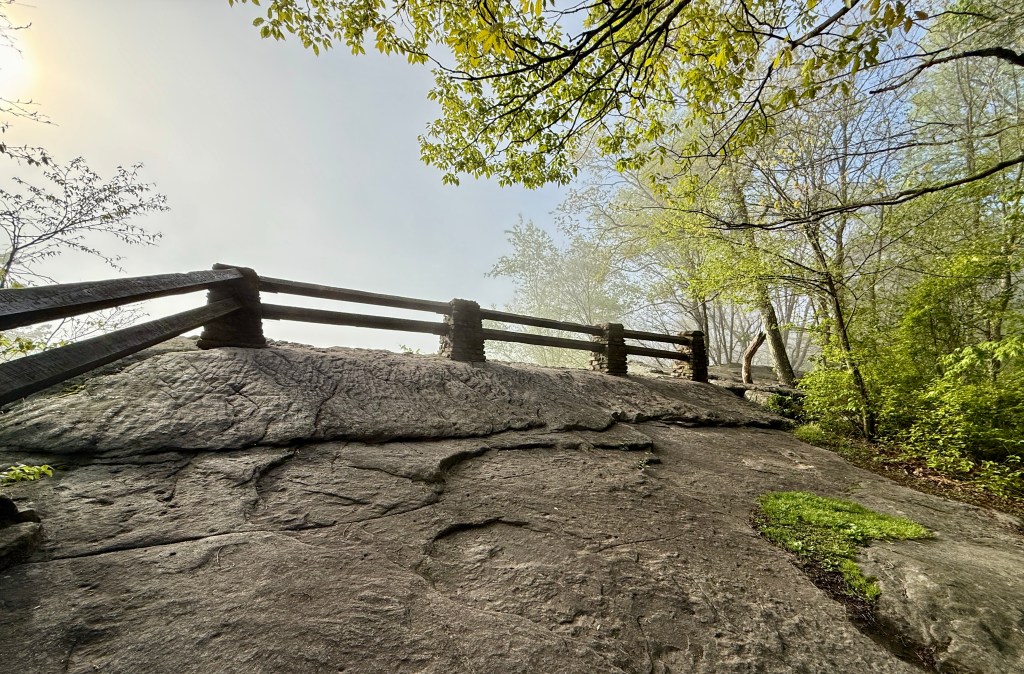
Mount Davis is the highest point in Pennsylvania. While many may imagine state high points as lofty summits with expansive views, most are quite nondescript bumps in unremarkable locations. Mount Davis is one of these: a boulder located at the crest of a 30-mile long ridge of Negro Mountain reaching 3,213 feet (979 meters), surrounded by trees. I may be making this sound like not worth visiting, but it actually was pretty cool! A lookout tower rises near the actual high point, and there is an informational sign display with history, geology, and local flora and fauna facts. Even better, I was completely alone in solitude, which was quite lovely!
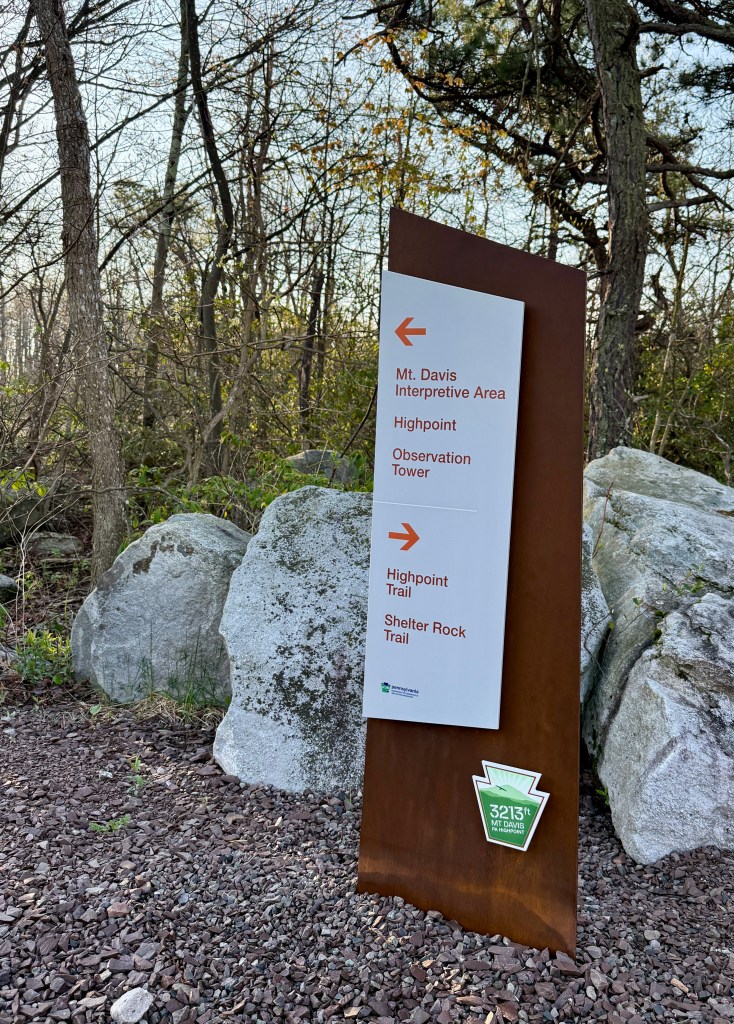
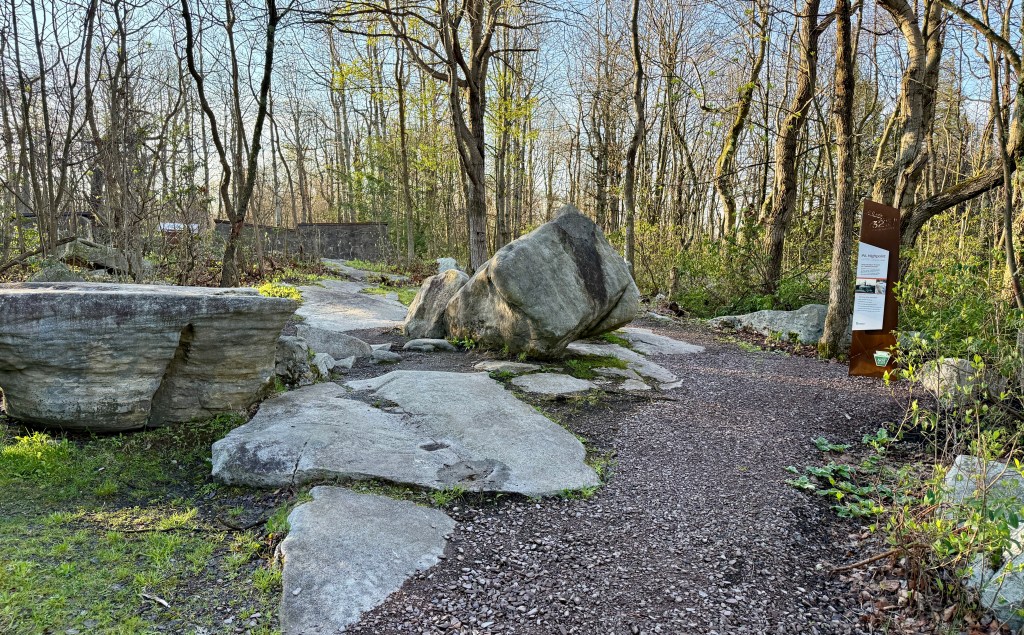
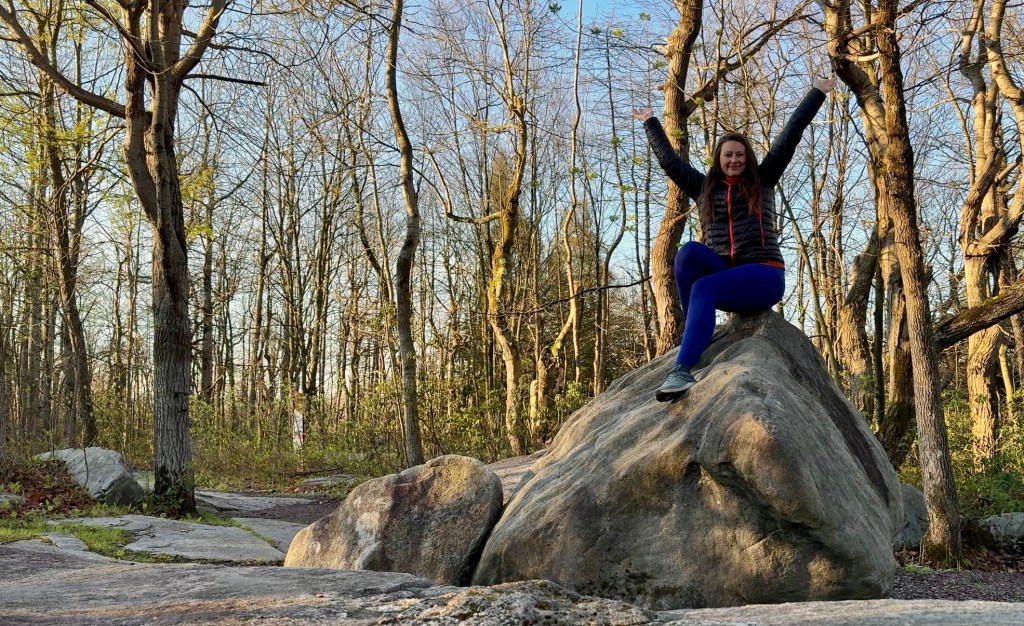
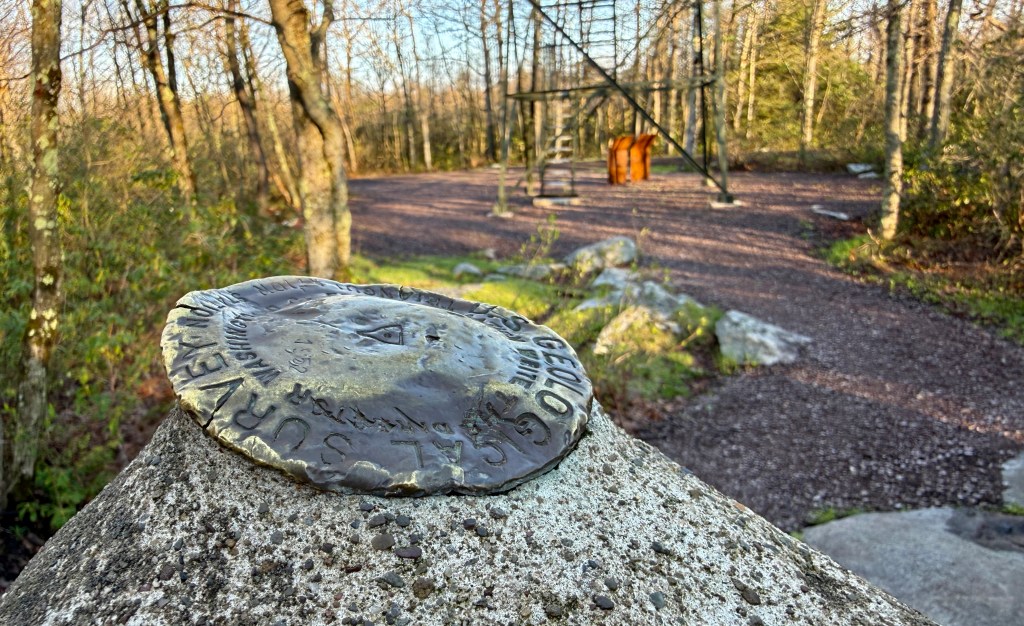
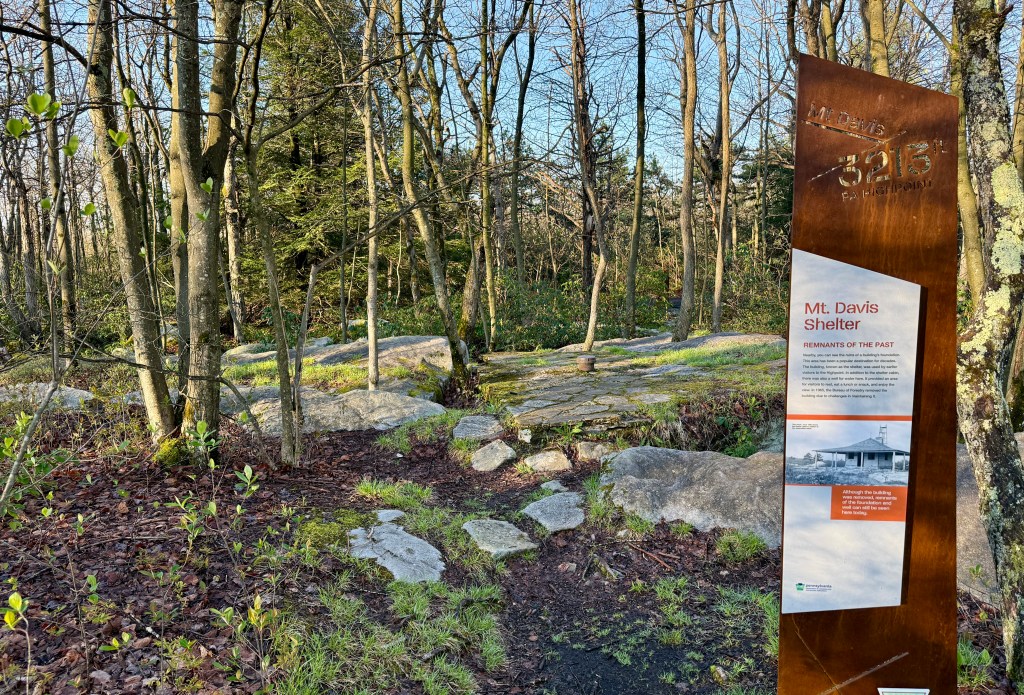
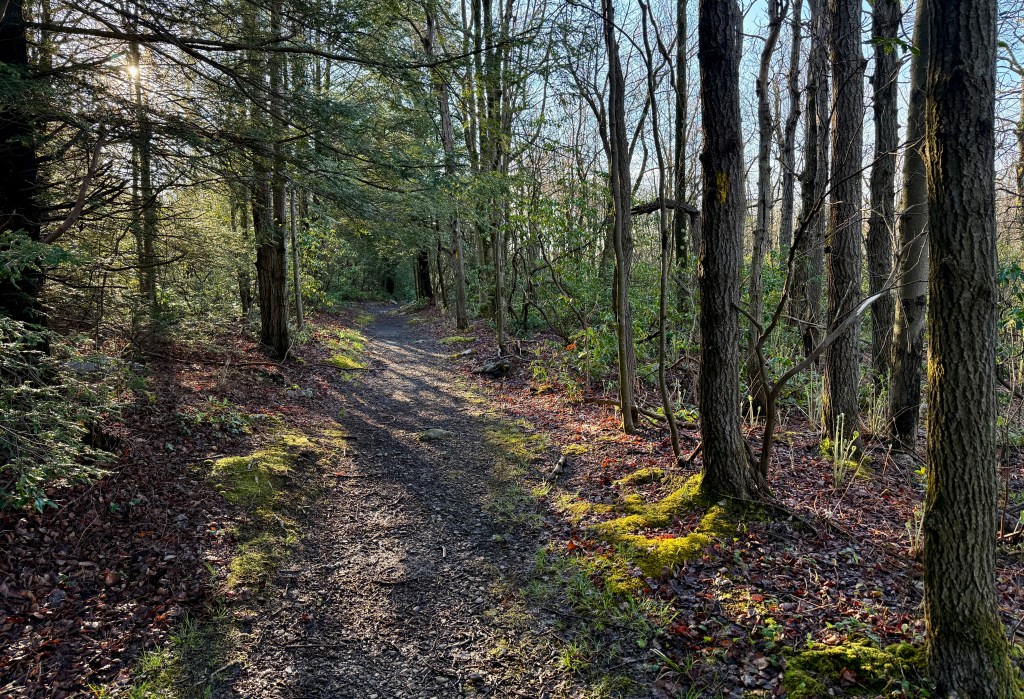
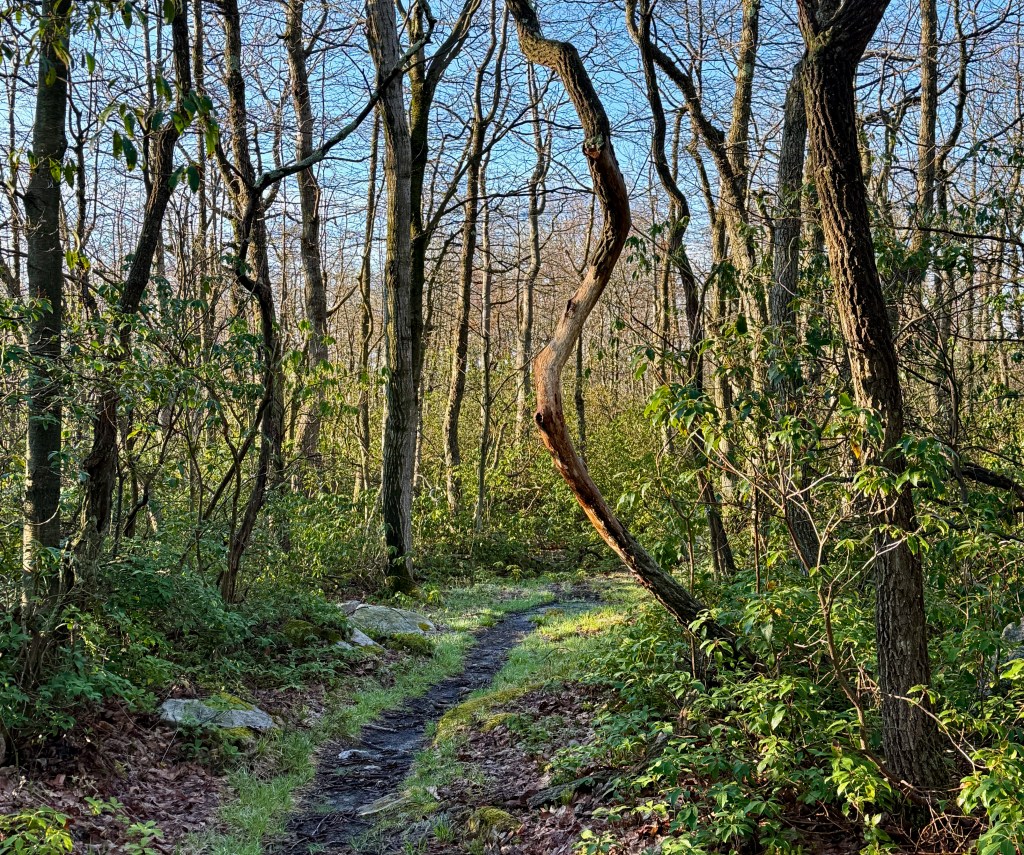
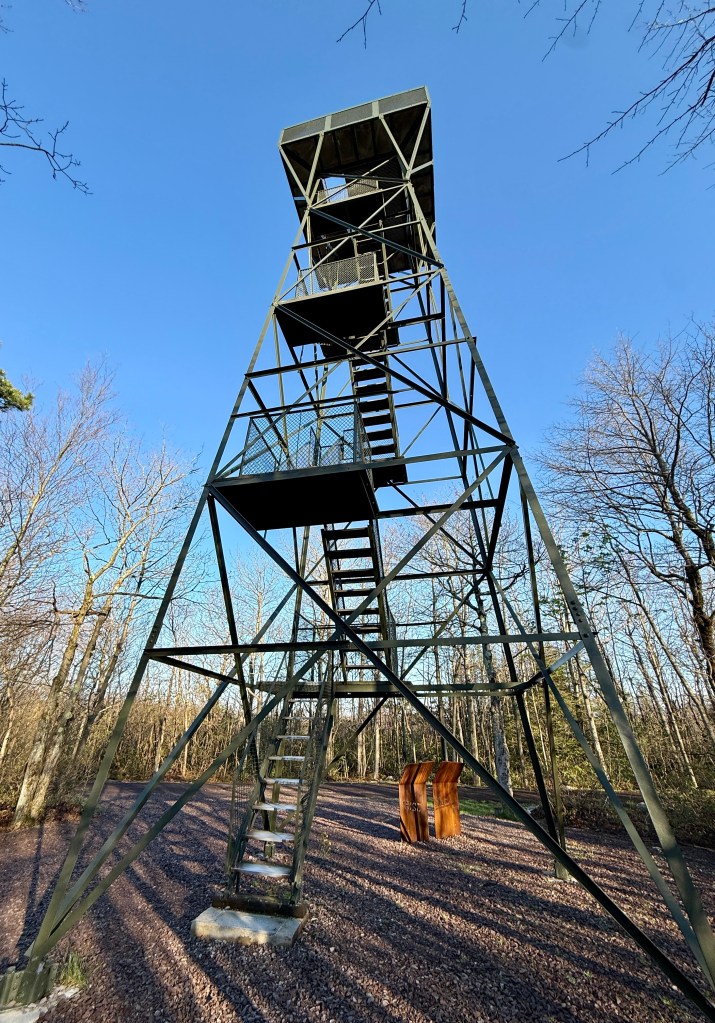
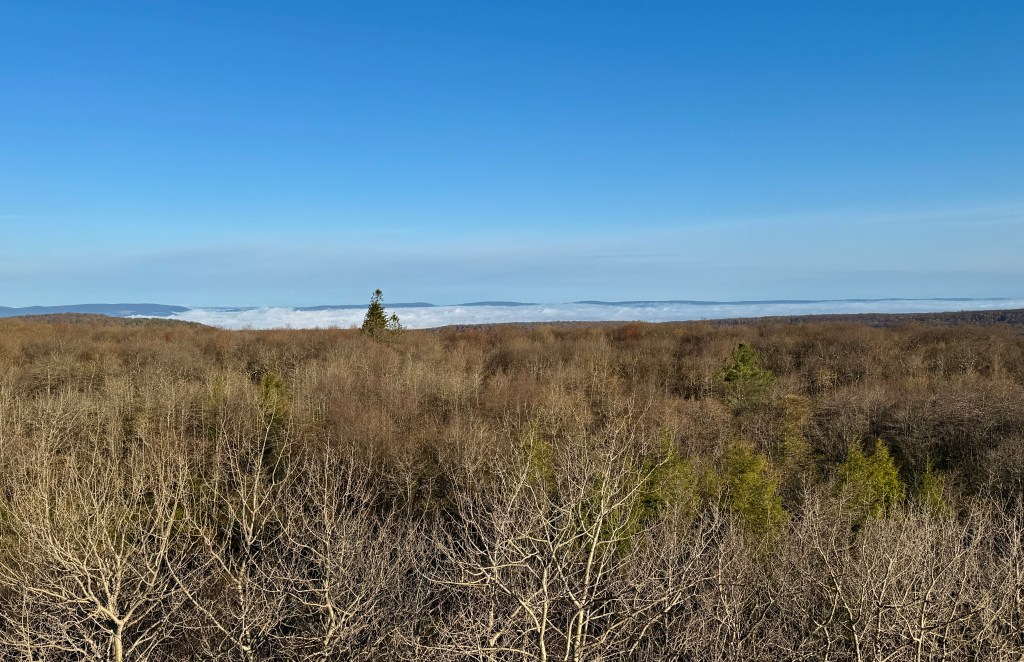

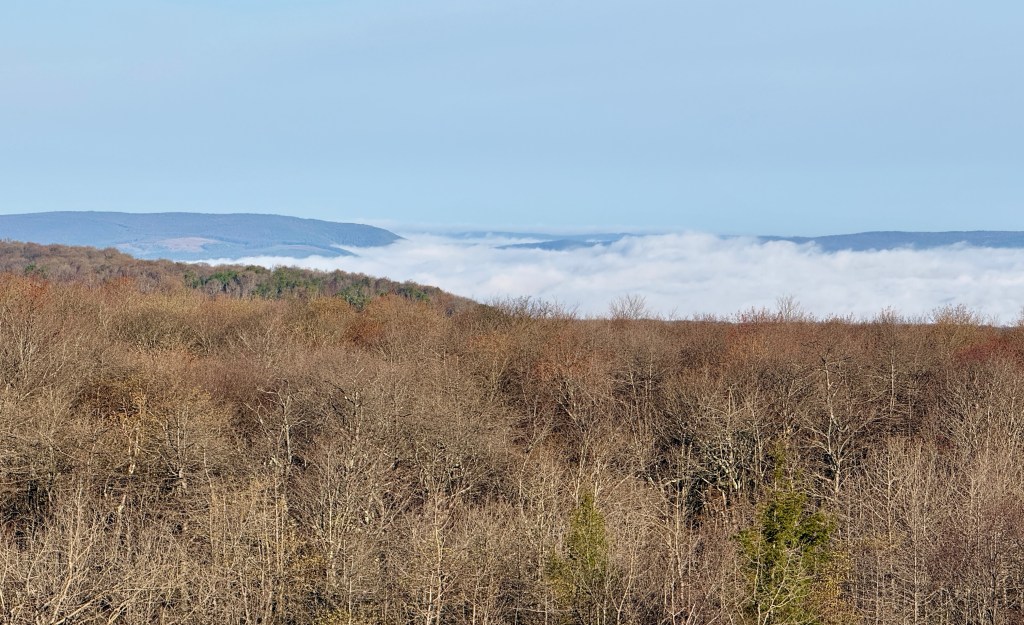
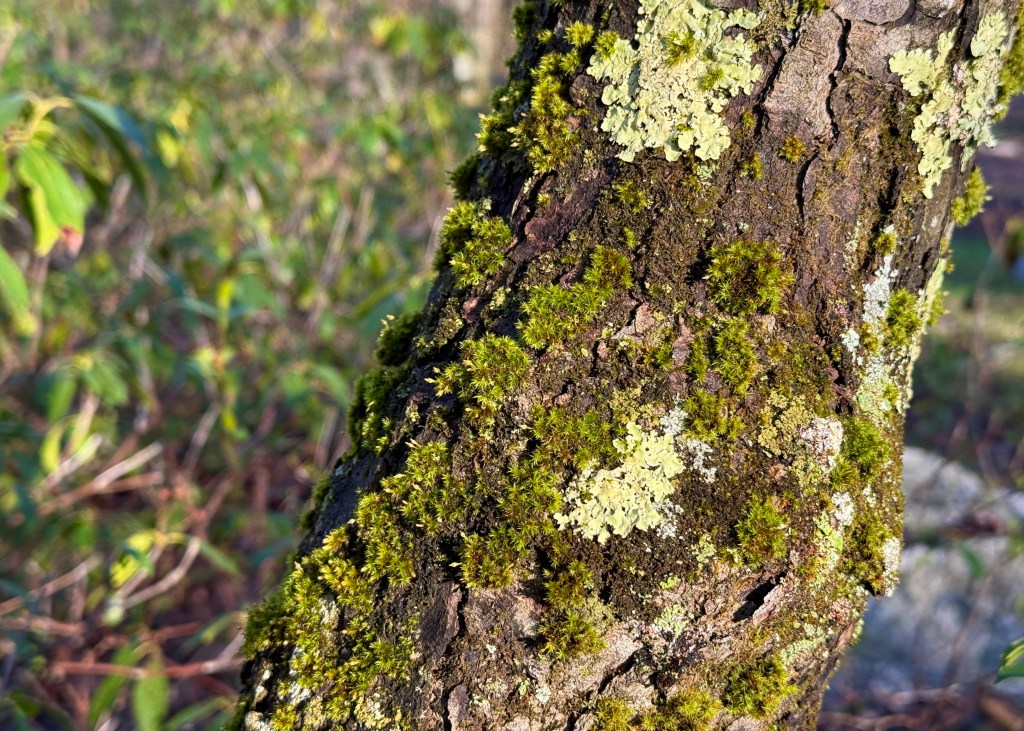
After a half-mile of meandering a taking photos, I headed out on the 45-minute drive towards my next stop, Fallingwater. But not without Google Maps doing me dirty, first! Usually I am good about downloading the maps offline before an adventure, but my brain was elsewhere, and I forgot that I probably wouldn’t have cell service at times in rural Pennsylvania. Google Maps did what it does best, and turned me down a dirt double track with a large sign proclaiming it is not maintained during the winter. I nervously chuckled and turned down the “road,” only to reverse after about a quarter-mile. Mud + unknown road + no cell service + rental car = not worth the adventure. Of course, this was all in a spot of no cell service, and Google screamed at me to go down the road it deemed had a 55mph speed limit (maybe in a rally car…). Luckily I was able to continue down the road I had turned off of, and eventually was rerouted on more appropriate roads.
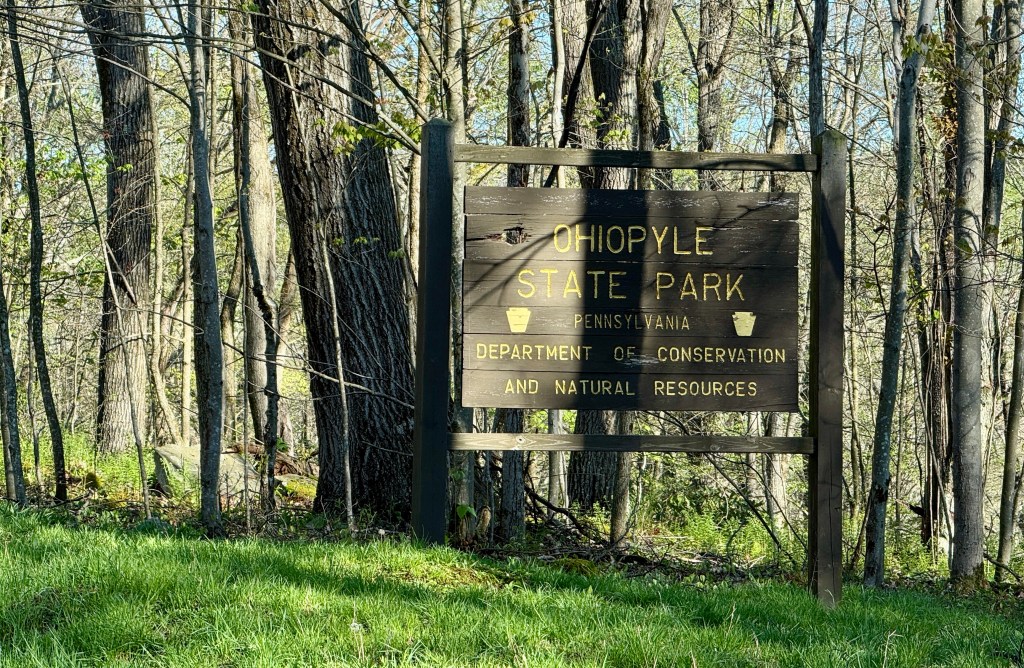
Rest of the journey lowkey in the driving department aside from some deer bounding out in front of me, I arrived at Fallingwater shortly before 9am, where I checked in with my reservation for the self-guided grounds pass.
Fallingwater is a house designed in 1935 by renowned American architect Frank Lloyd Wright (1867-1959) for the Kaufmann family, owners of Pittsburgh’s largest department store. Frank Lloyd Wright’s Fallingwater is one of his most widely acclaimed works and best exemplifies his philosophy of organic architecture: the harmonious union of art and nature.
Fallingwater is located in the mountains of Southwestern Pennsylvania, also known as the Laurel Highlands, in Mill Run, Fayette County, which is about 70 miles southeast of Pittsburgh. Wright designed Fallingwater to rise above the waterfall over which it is built. Local craftsmen quarried native sandstone and other materials from the property and completed the construction of the main house, guest house and service wing in 1939.
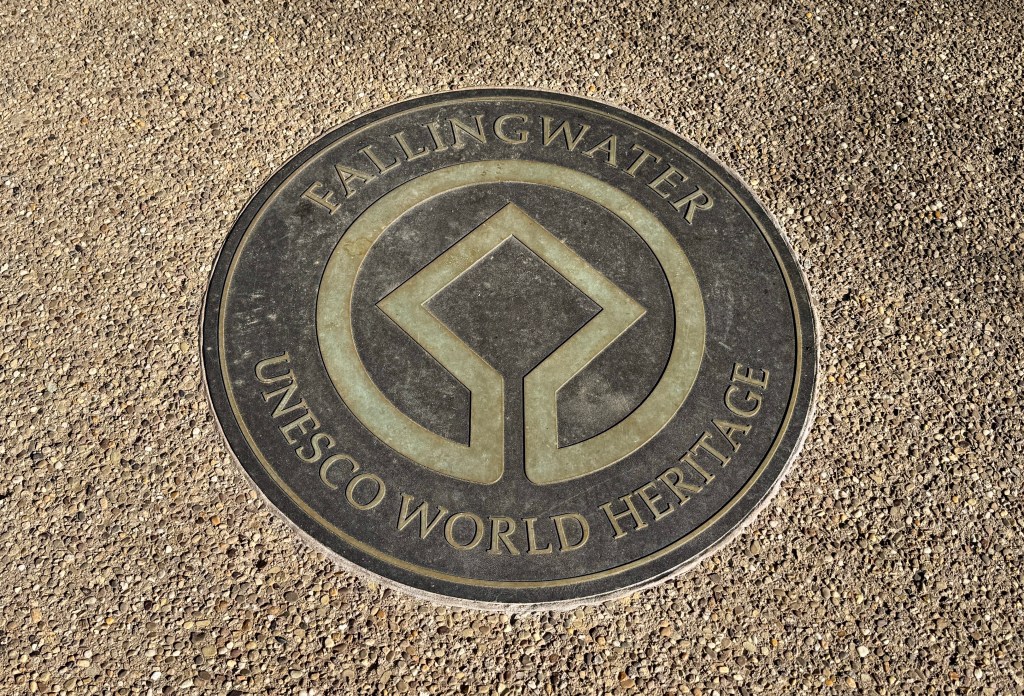
Fallingwater is owned and operated by the Conservancy and open to the public to tour as a museum. Fallingwater is surrounded by 5,100 acres of natural land, streams and trails known as the Bear Run Nature Reserve. On July 10, 2019, UNESCO inscribed Fallingwater and seven other Frank Lloyd Wright-designed buildings to the World Heritage List. In addition, Fallingwater is designated as a National Historic Landmark and Commonwealth of Pennsylvania Treasure, and named the “best all-time work of American architecture” in a poll of members of the American Institute of Architects. Since the first public tours began in 1964, Fallingwater has welcomed more than six million visitors from across the globe. Travel+Leisure Magazine stated that Fallingwater is “one of the 12 landmarks that will change the way you see the world.”
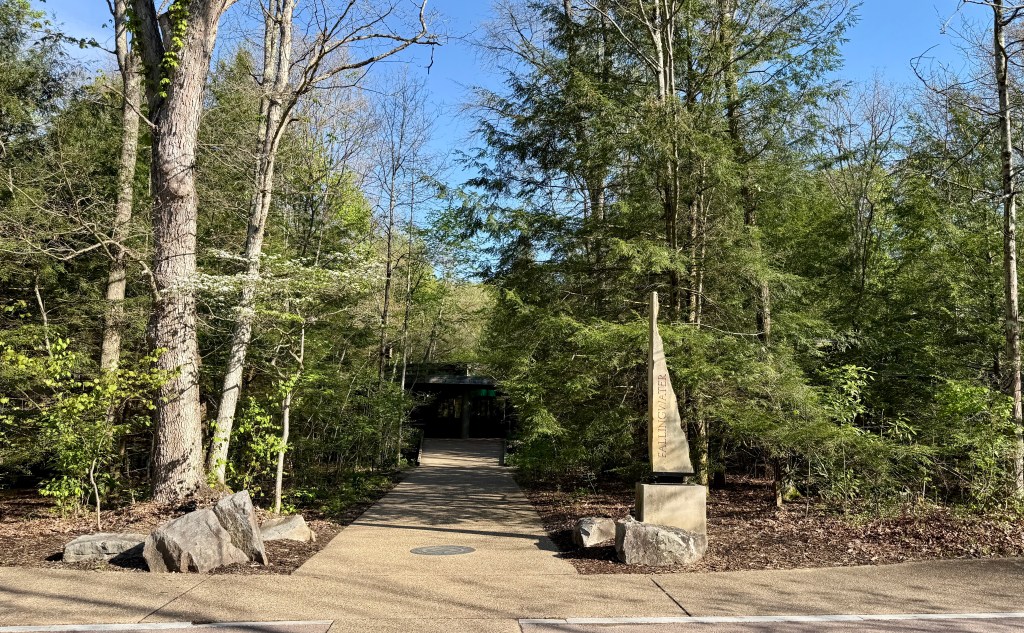
I am not an architecture-enlightened person (I describe my house as square-shaped, showing exactly how much I know about what Zillow calls a “bungalow”), but I do love me a waterfall and UNESCO World Heritage Sites. What I found in this Pennsylvania forest was my dream home. Transport Fallingwater to my Rocky Mountains, and I’ll happily live out my days! I mean seriously, a house built over a waterfall?! If I win the lottery, I am having a house like this built over a mountain stream, mark my words!
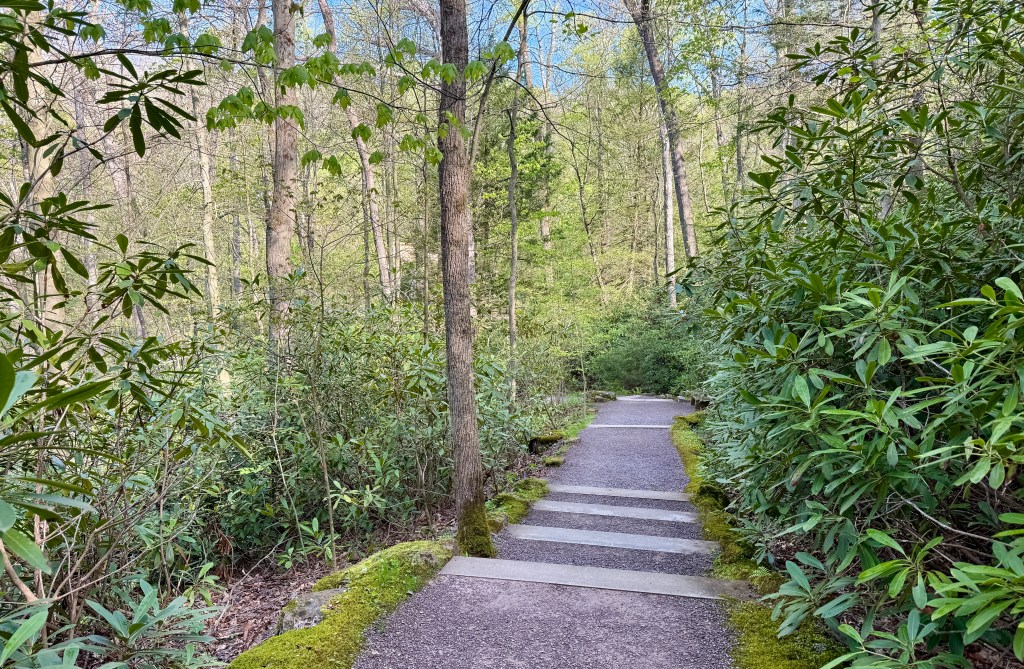
The self-guided ground pass leaves one to meander at their choosing the various paths and trails, but does not include going inside the house. I was quite okay with this (though curiosity is getting to me on what the interior is like), and quickly headed down to the view point that shows Bear Run falling spectacularly from the underneath of the house.
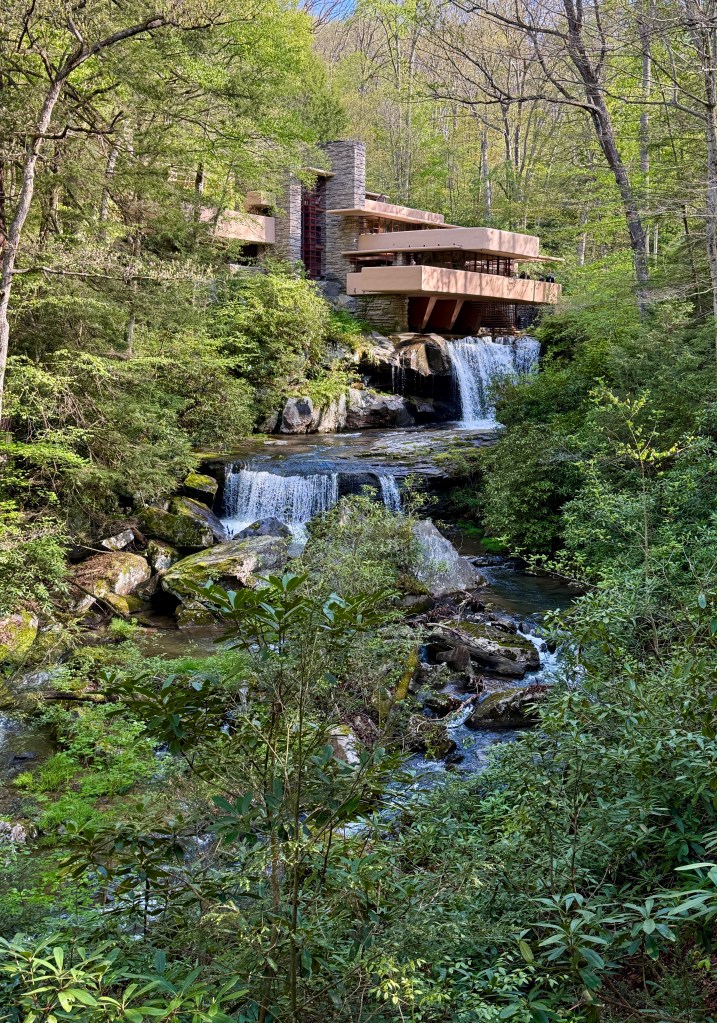
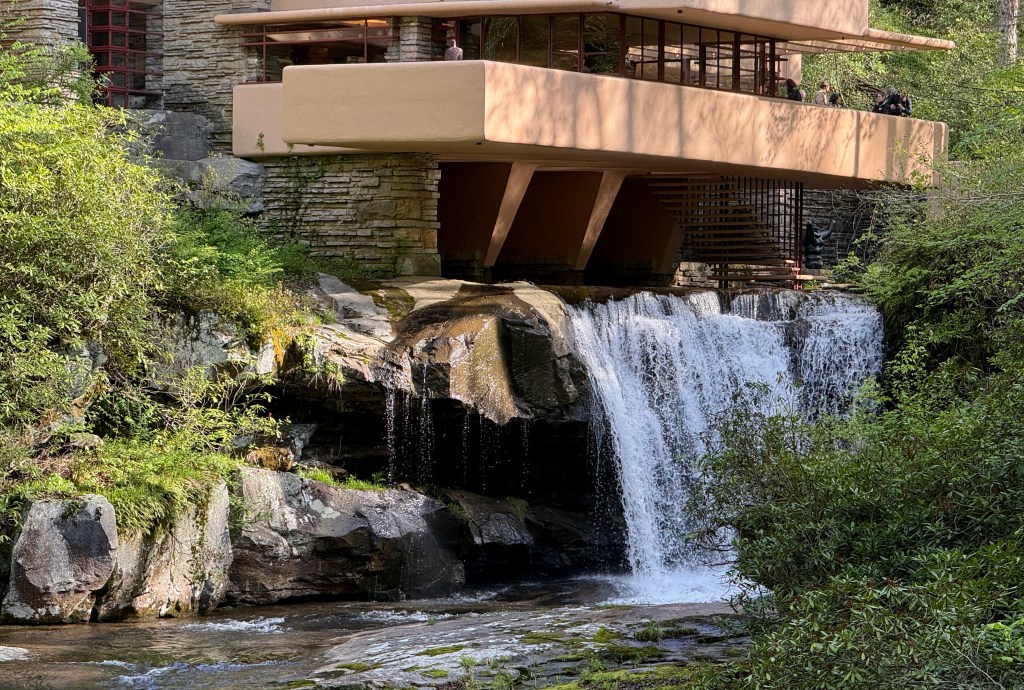
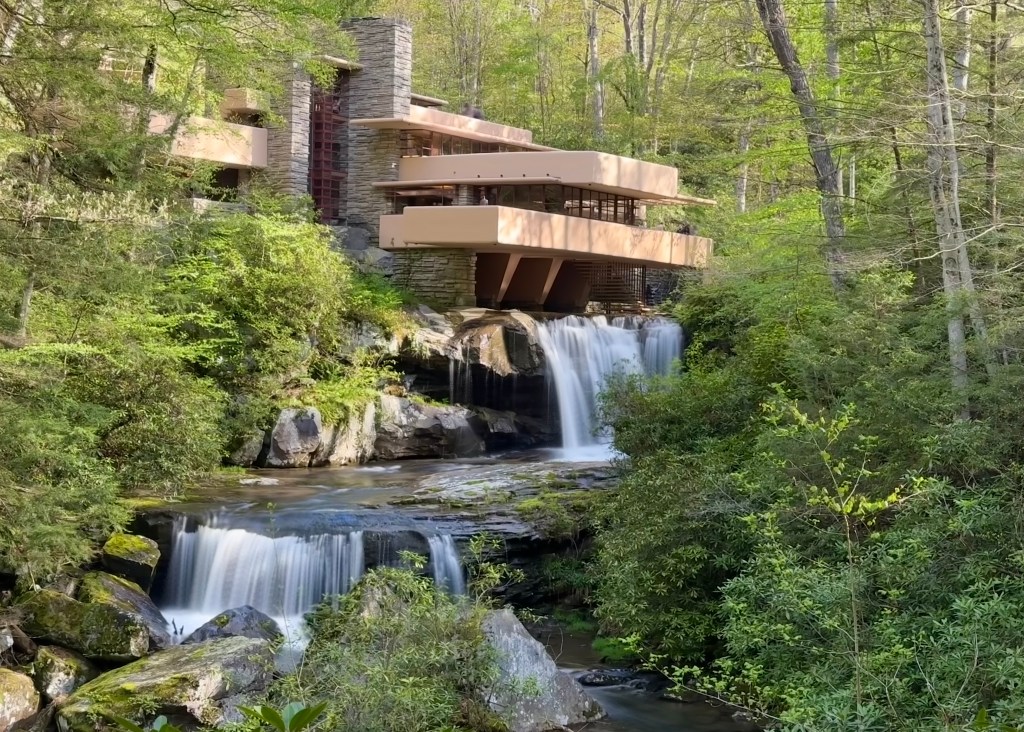
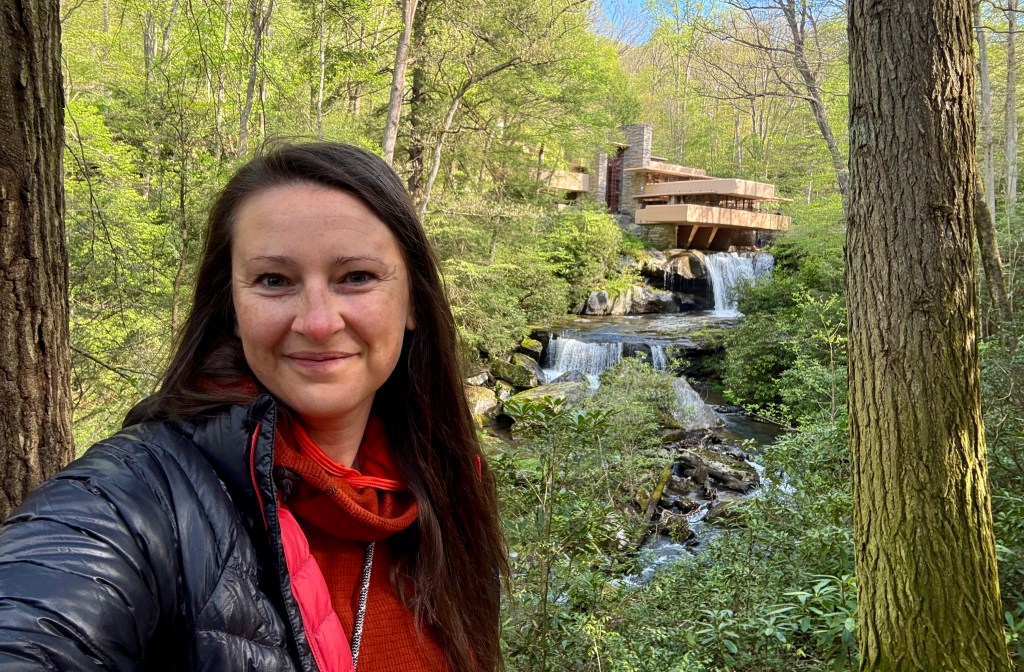
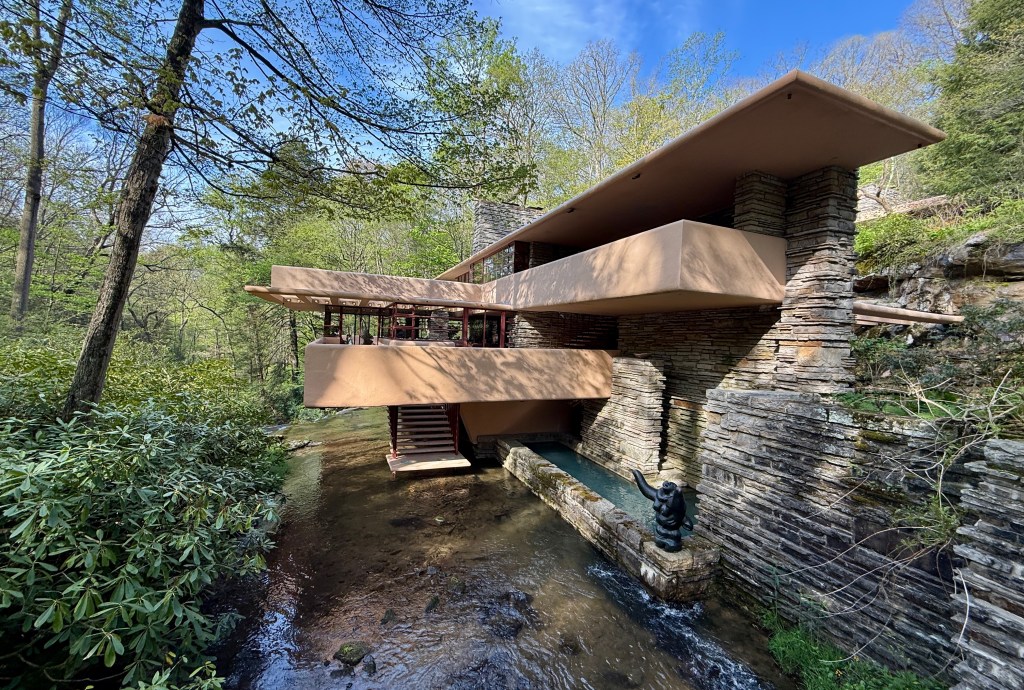
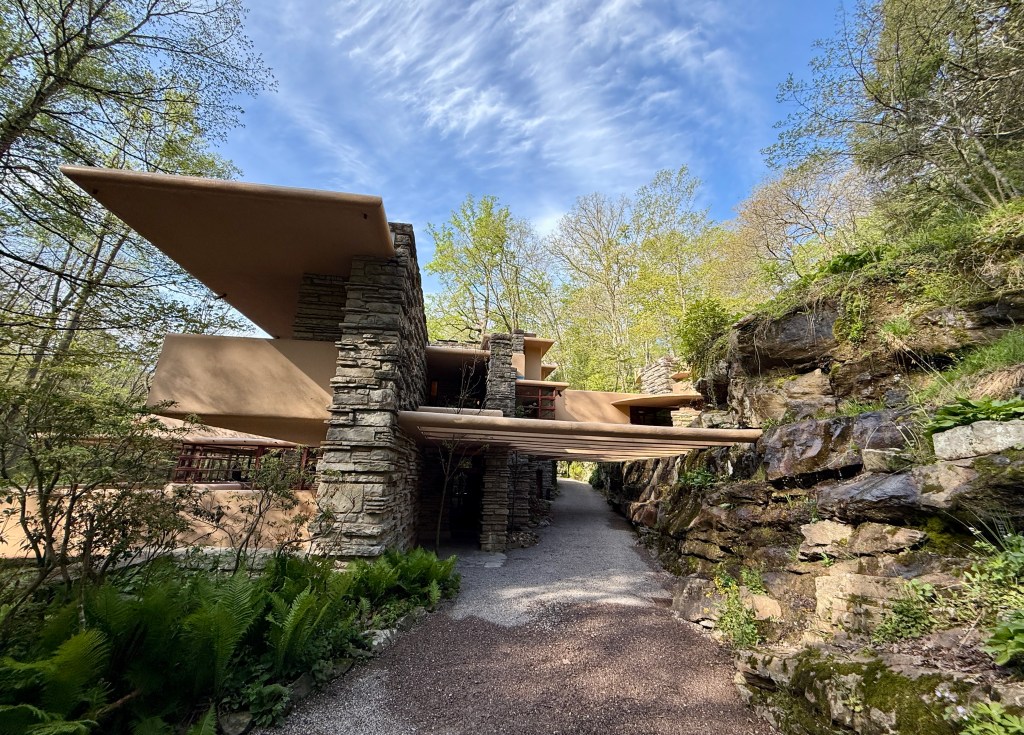
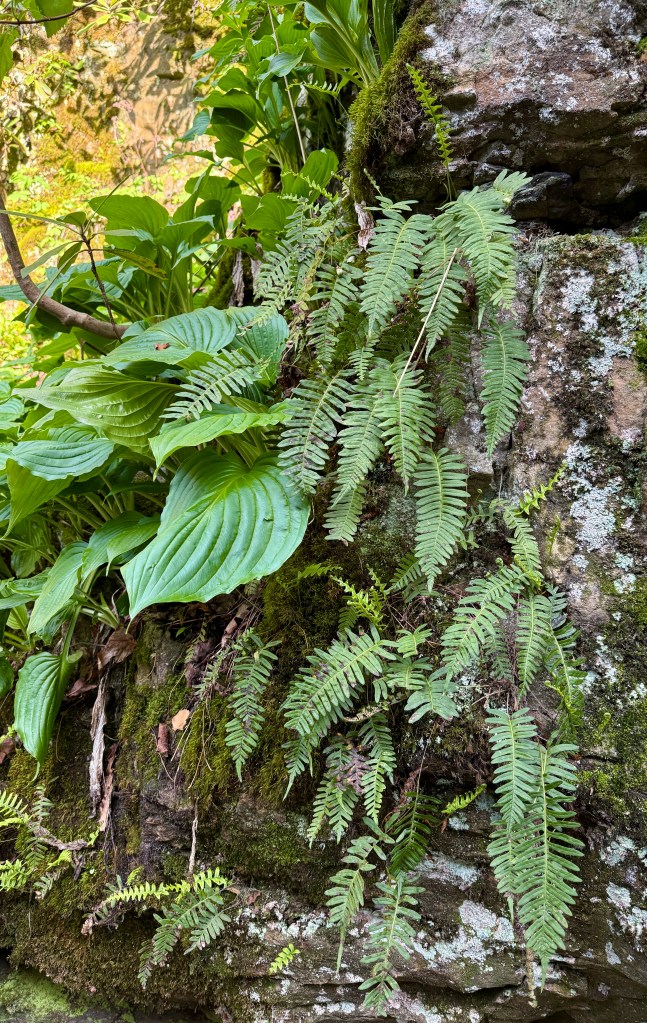
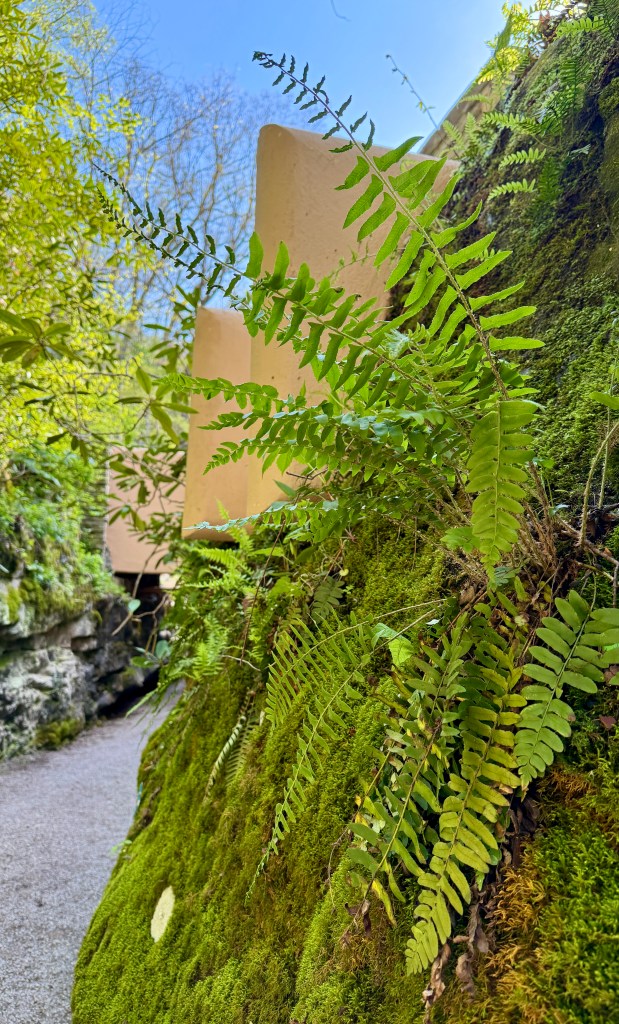
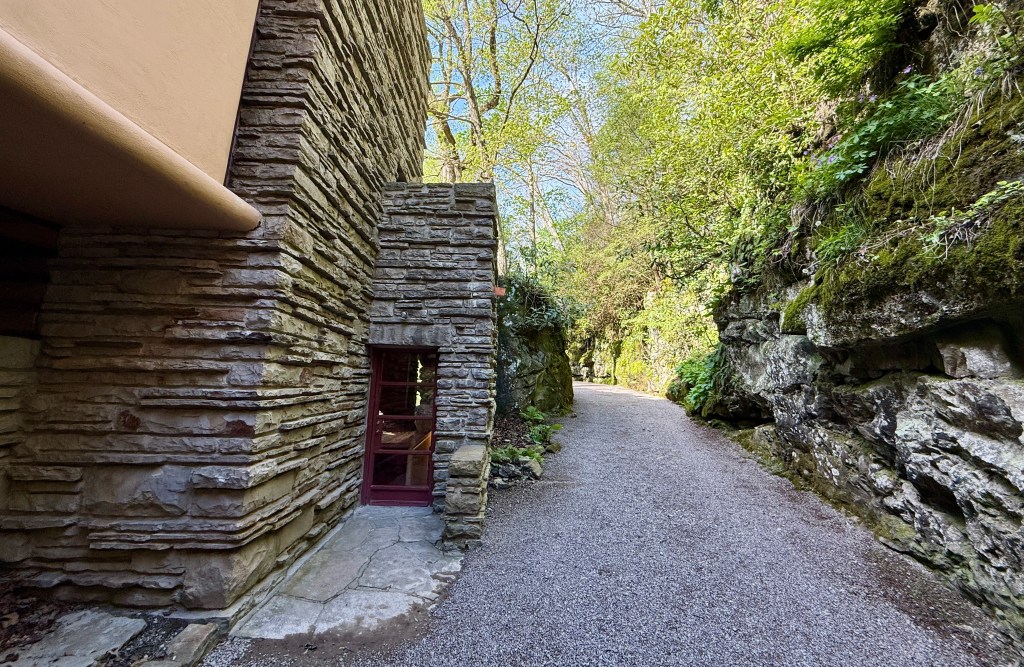
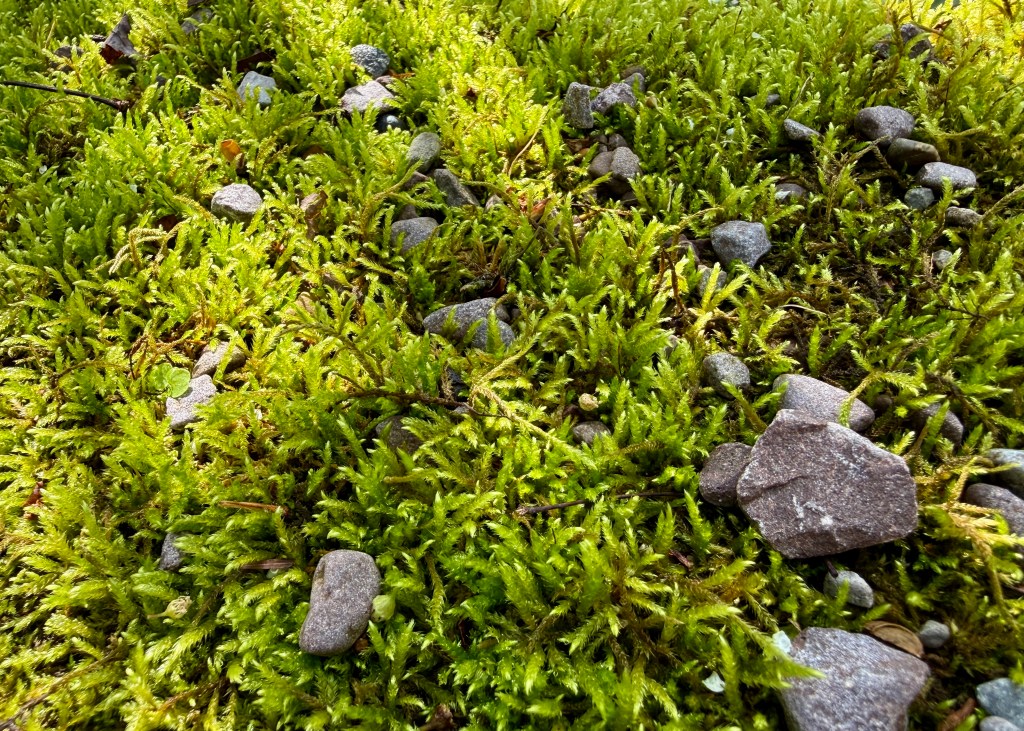
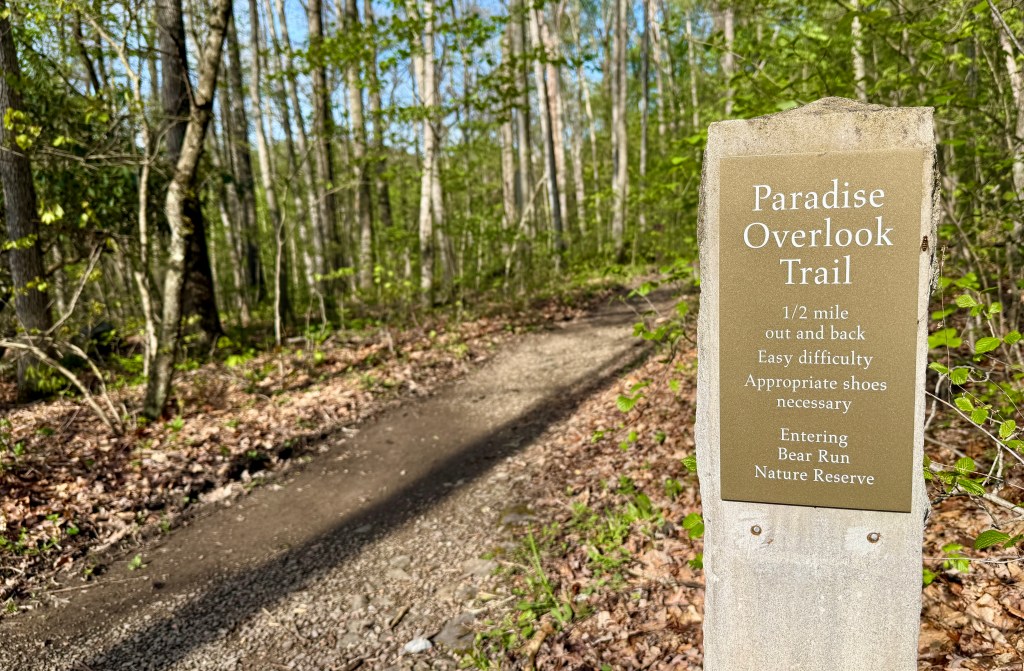
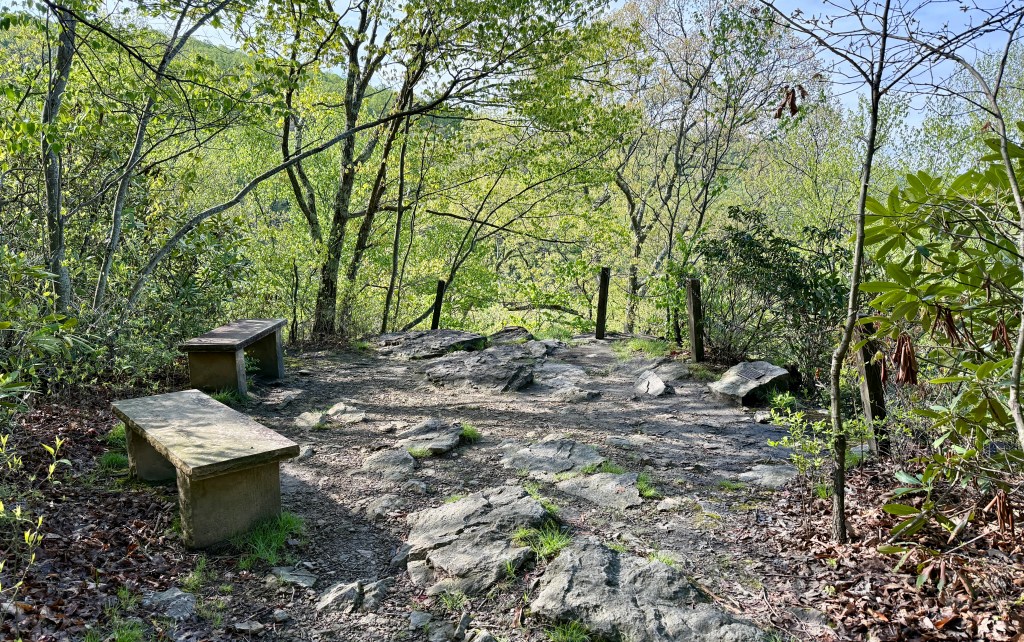
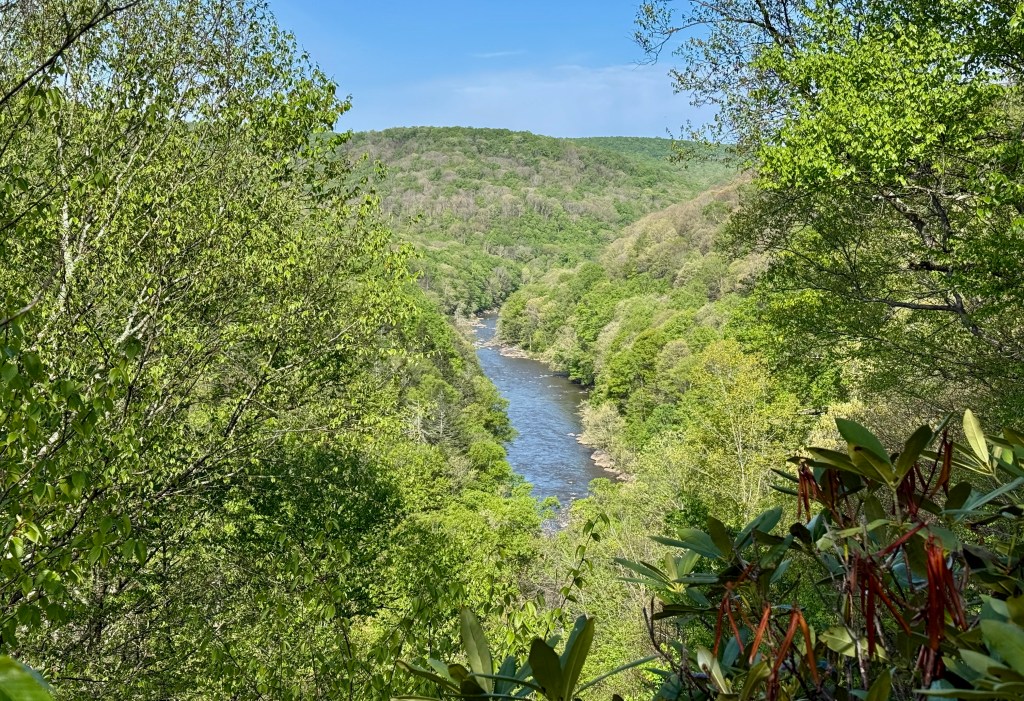
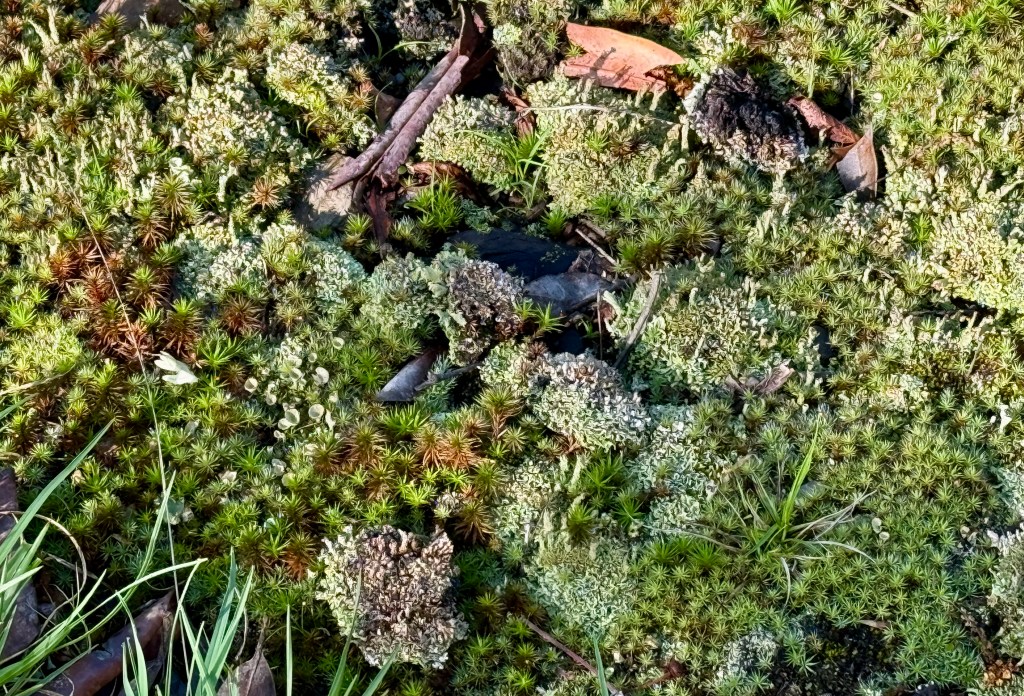
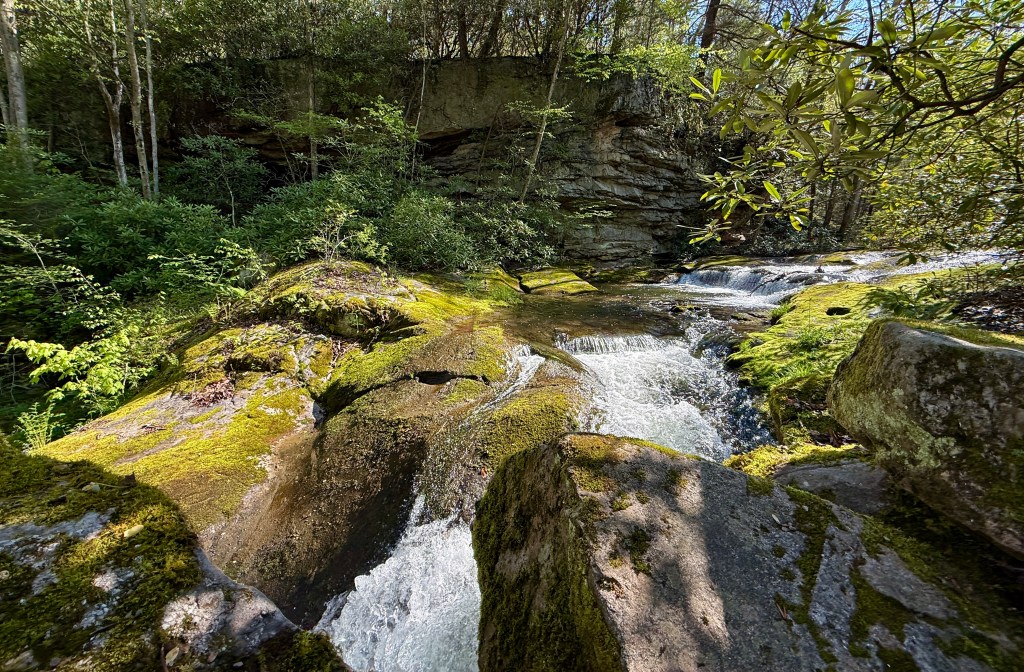
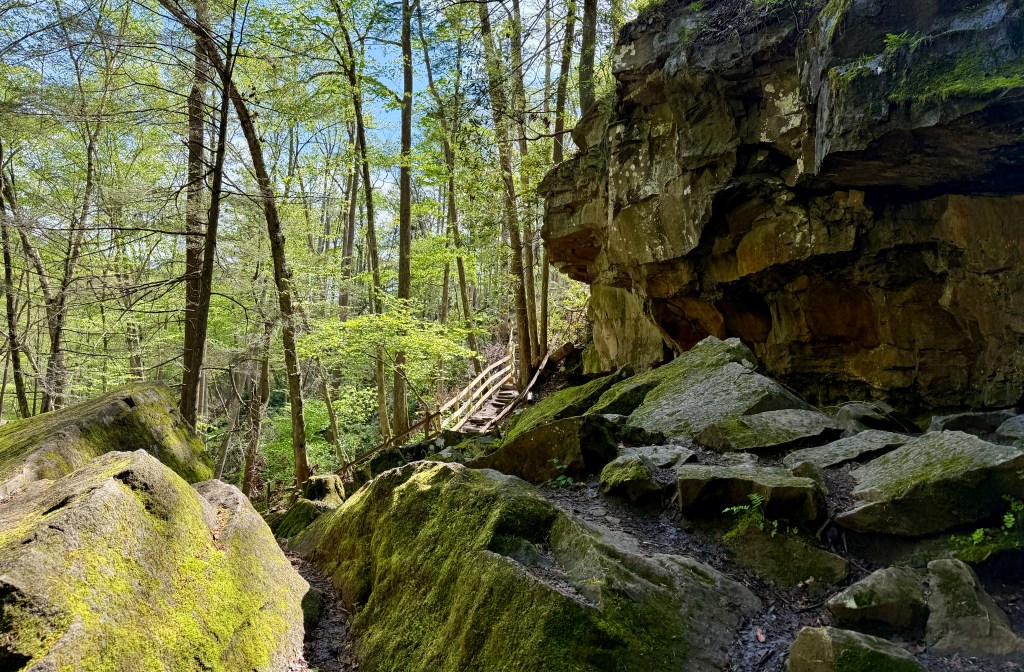
After taking in the view, I headed up to Fallingwater, passing by the exterior as I headed to the Paradise Overlook Trail, a short one-mile (round trip) detour to glance down into the Youghiogheny River gorge. I then discovered a short spur to the banks of Bear Run near some cascades where I sat for a moment and enjoyed the sounds of the waterfall and mossy landscape.

Naturally, I ended my visit with a trip to the museum store, where the postcard selection was disappointing, but I nonetheless found some goodies to purchase. There is also a cafe on site, so I got myself a $7 16-ounce latte (it was really good, but dang, I could’ve drank one double the size!) and a big herbed ham and pimento spread sandwich I would tuck away for a picnic lunch later in the day.
Overall, I spent an hour wandering around Fallingwater (just about 1.5 miles in distance) and felt like I had a very well-rounded visit for not taking a guided tour that would have included the interior of the house. I am very happy I chose the 9am slot, as I had some solitude before the masses started to arrive, and found some peaceful moments. It was definitely a lot more peopley as I was finishing up my visit.
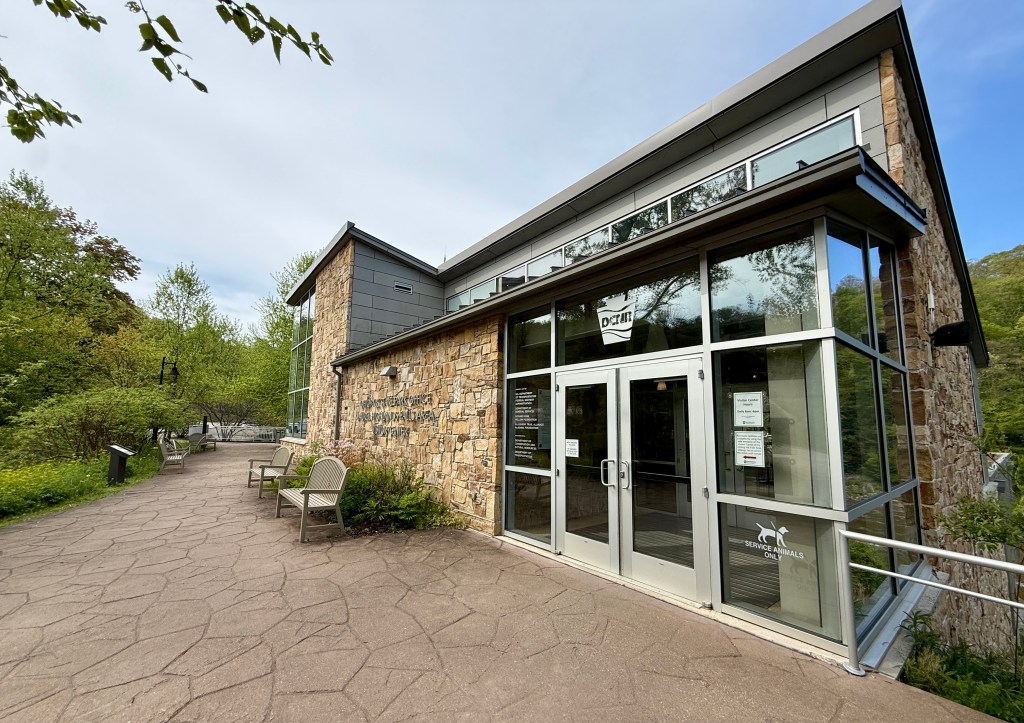
My waterfall chasing was not over, and after just a few minutes in the car (about long enough to chug most of my $7 latte) I arrived at the parking for Ohiopyle Falls and the visitor center for Ohiopyle State Park. Ohiopyle Falls (located on the Youghiogheny River, which is pronounced yawki-gay-nee) is easily viewable from platforms right near the parking, so beelined for the thunderous waters.
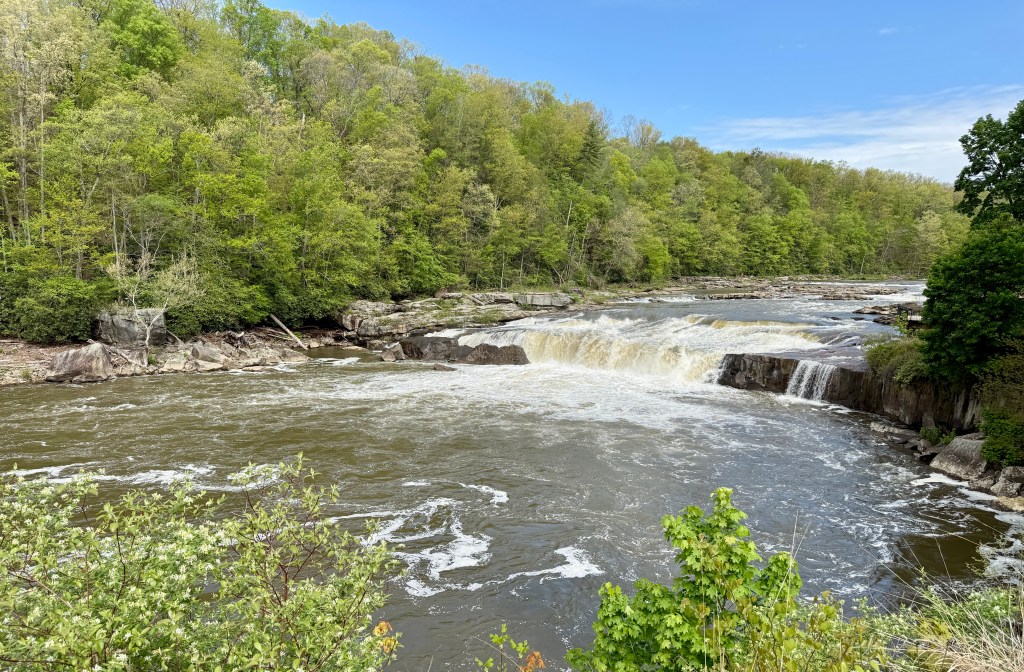
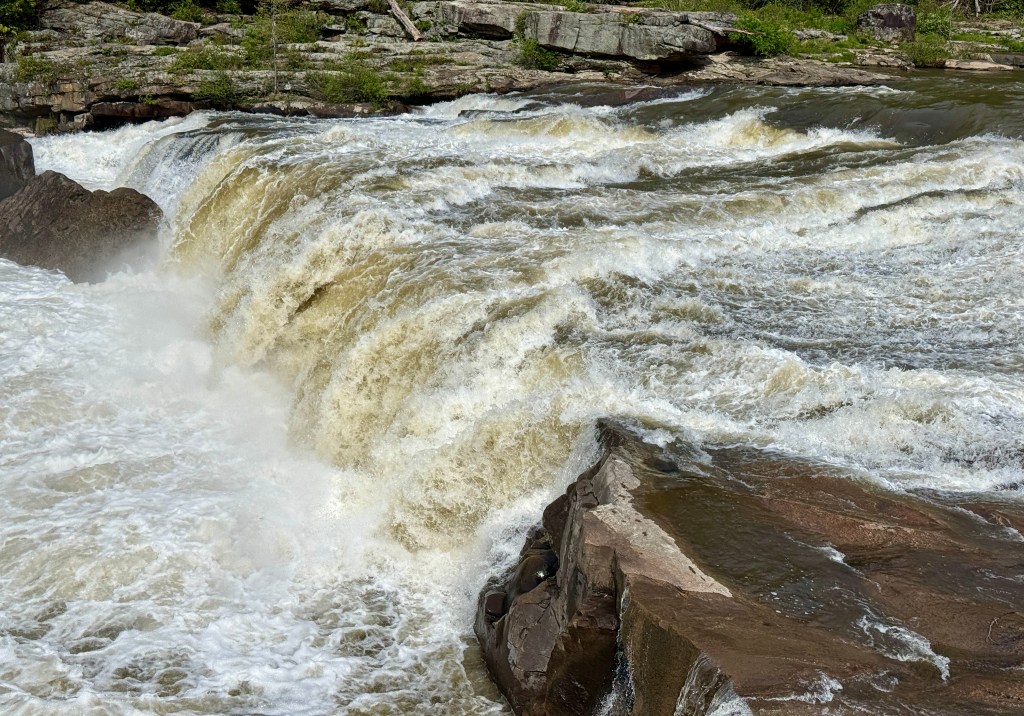
Ohiopyle State Park is home to numerous waterfalls, but the plans for my day was jammed packed so I headed out next to the original waterfall that caught my eye when planning for this trip: Cucumber Falls! I love cucumbers and I love waterfalls, so could this be my dream waterfall?!
I drove maybe two minutes to reach the trailhead to the closest access to Cucumber Falls. However, it is possible to hike there from the Ohiopyle Falls areas, which I may have considered if I was going to have more time in my day and wasn’t so concerned about mud (and ticks… east coast ticks freak me out more than anything with their Lyme disease and alpha-gal syndrome!). From the Cucumber Falls parking area, it is just a few hundred yards of descending on stairs to reach the falls.
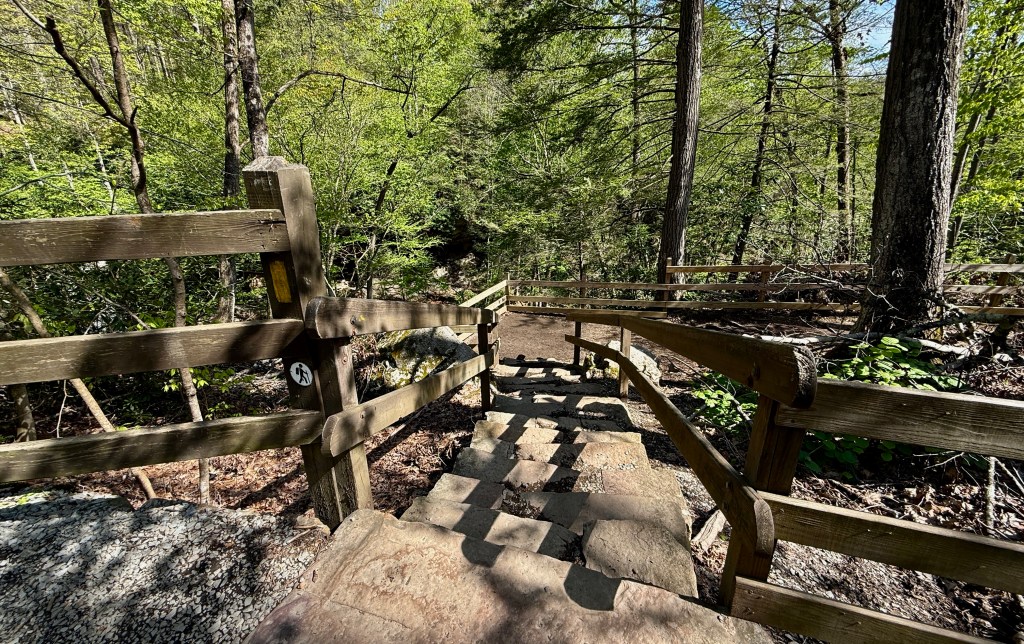
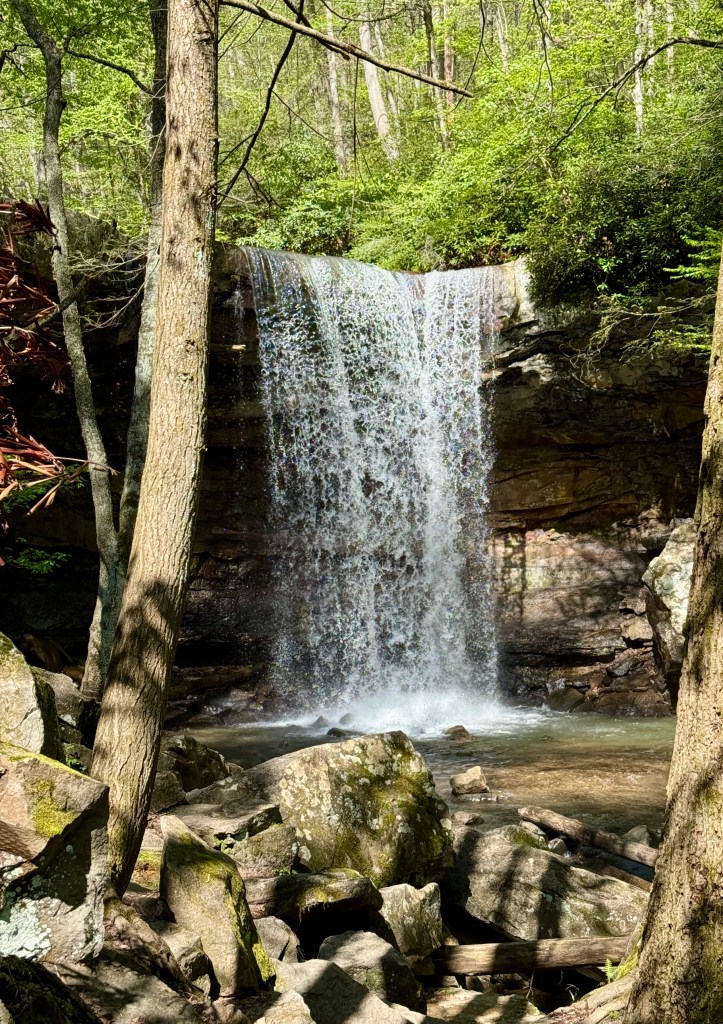
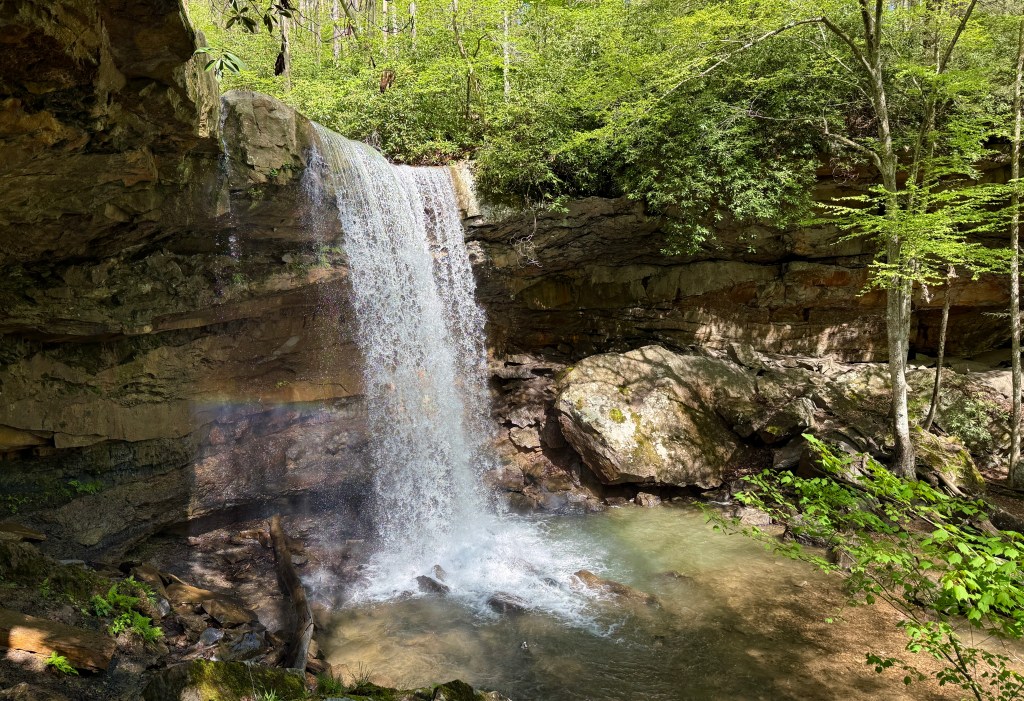
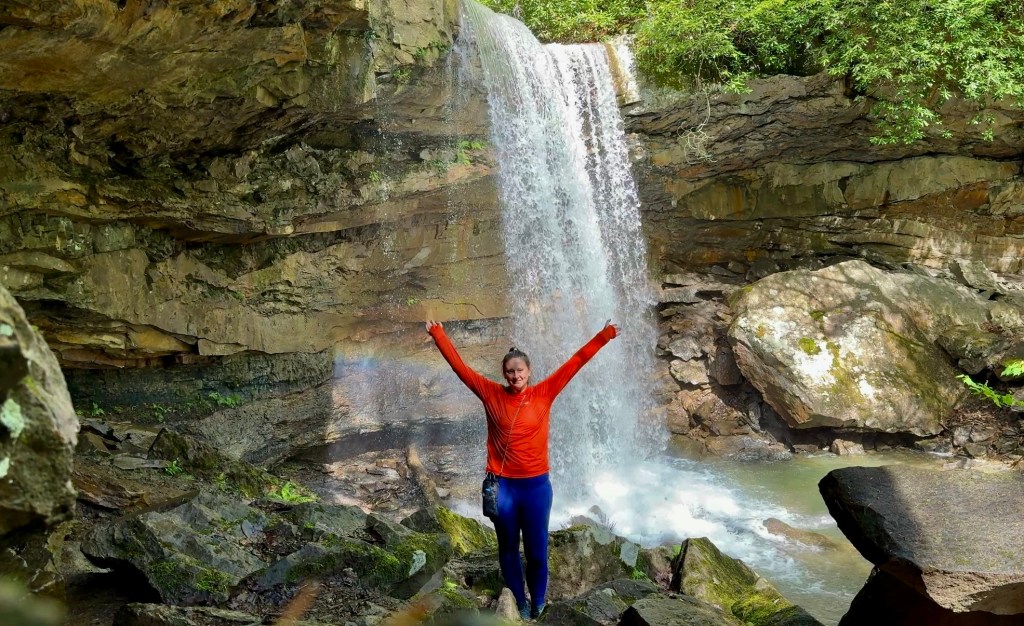
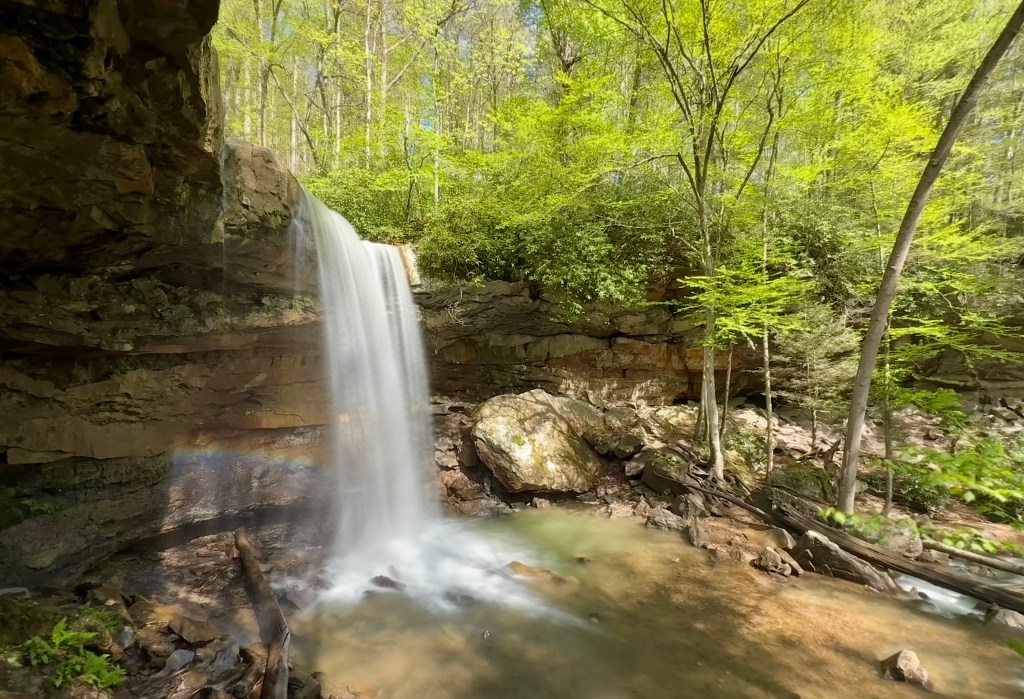
Falling thirty feet on Cucumber Run, Cucumber Falls is definitely a beauty, and one that it is possible to wander behind if you want to brave the slippery rocks. In the late morning sunlight, I was also treated to a rainbow!
Since this day was packed full, I am splitting the day into two separate blog posts. Stay tune for part 2, where I head to Fort Necessity National Battlefield, Friendship Hill National Historic Site, and Maryland’s high point, Hoye Crest, to finish out my long day of adventuring!





Leave a comment