

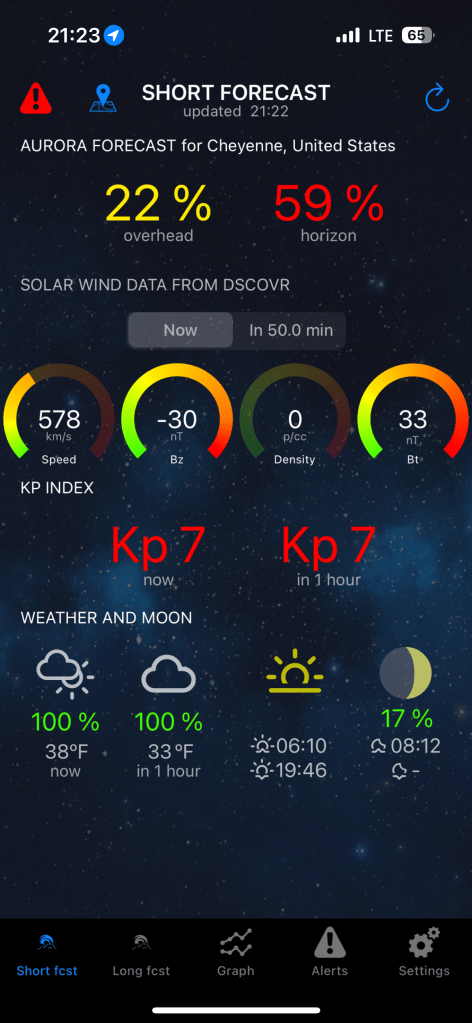
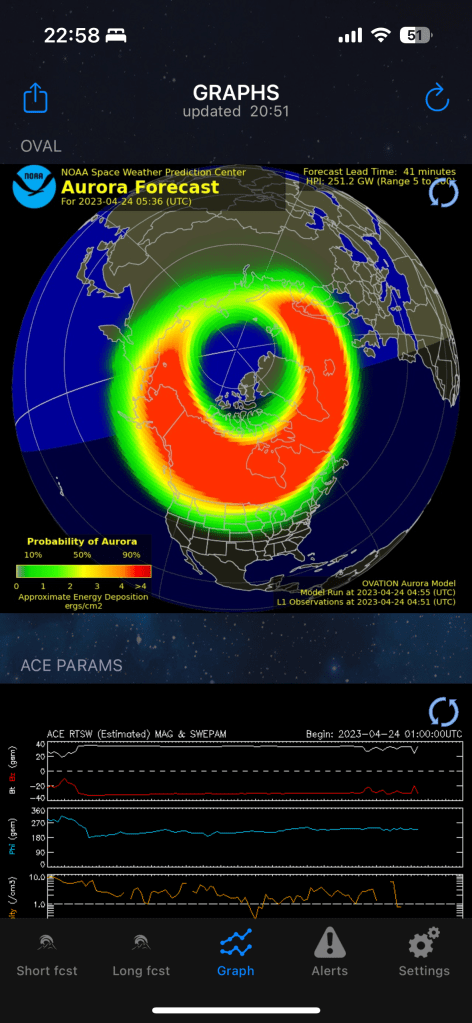
Living at 41.14°N does not lend itself to many aurora borealis, or northern lights, sightings. All my times seeing them had been in Iceland, or en route to Iceland on the plane. So when a mega geomagnetic storm (coronal mass ejection) made it possible to have a KP index of 8 in Cheyenne, Wyoming, on April 23rd, I quickly jumped off the couch, gathered up my camera, and headed north of town!
I decided on an unmaintained narrow county road north of town, one I’ve ridden my bike on many times. With dusk still lending plenty of daylight, I texted my friend Alan my disappointment with the clouds and light. Being the ever wiseman that he is, he cautioned me to be patient and to wait it out.
Boy, am I ever happy I did!
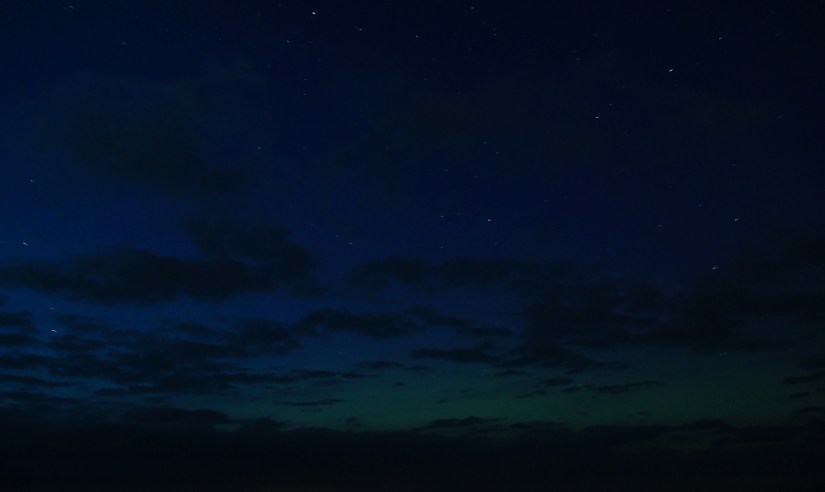
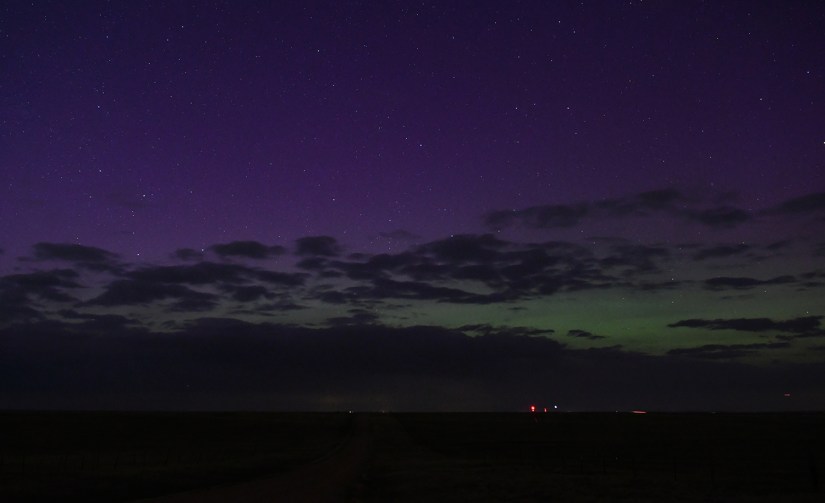
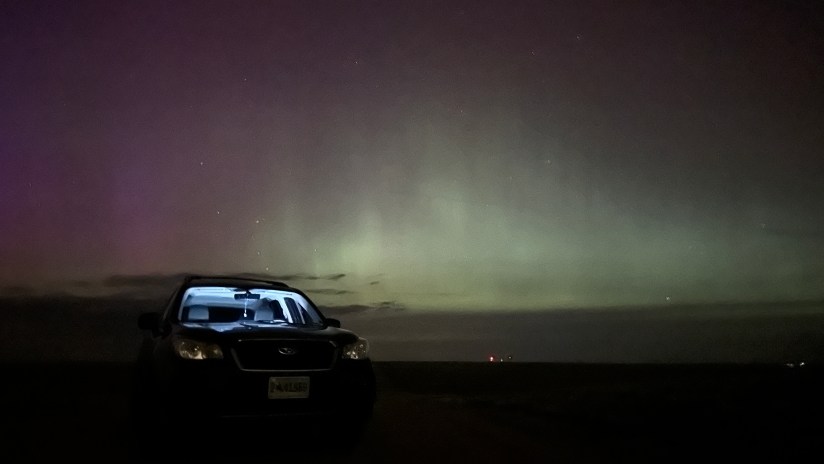
The lights first started as a green glow about 9pm, and as the night progressed, dazzled me with dancing pillars and brilliant pink and purples in the photos by 9:30pm. More times than naught I was jumping down in the middle of this lonely gravel road in pure joy.
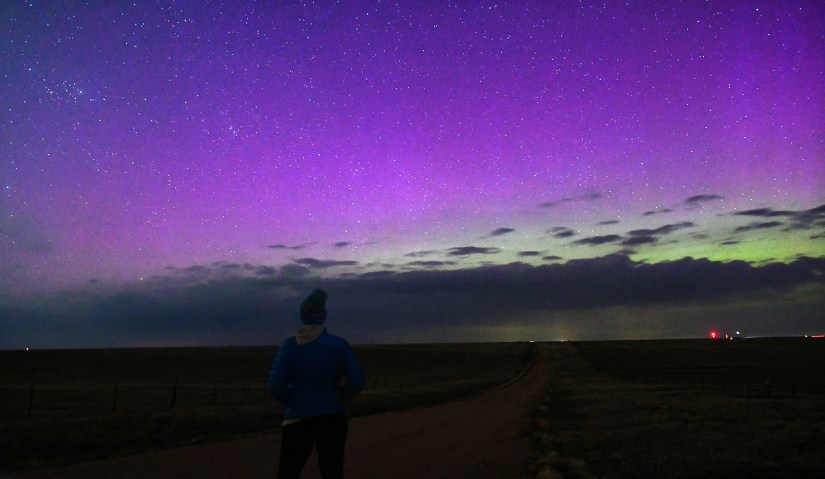
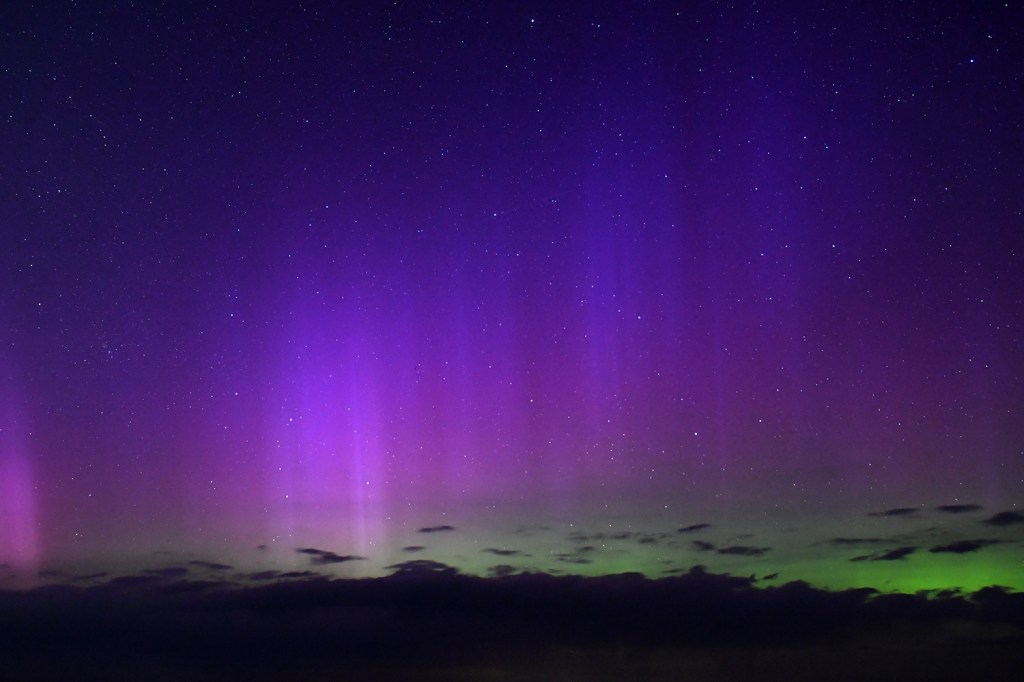
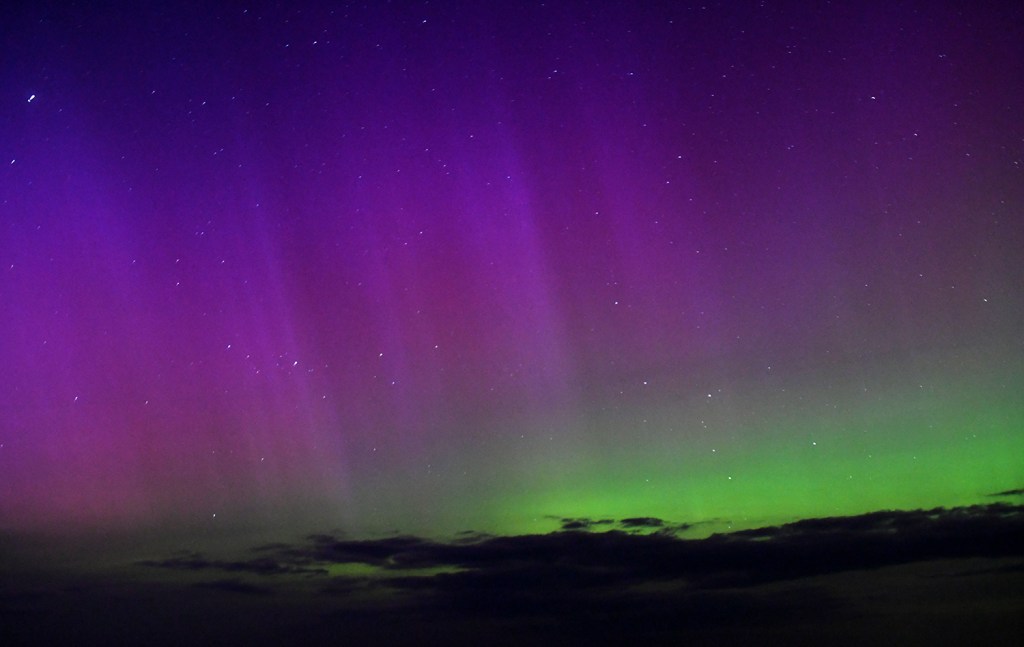
(Sooooo I forgot to grab my tripod mount for the camera while I was hurrying out the door. A blanket and my car’s hood had to do. Whoops!)


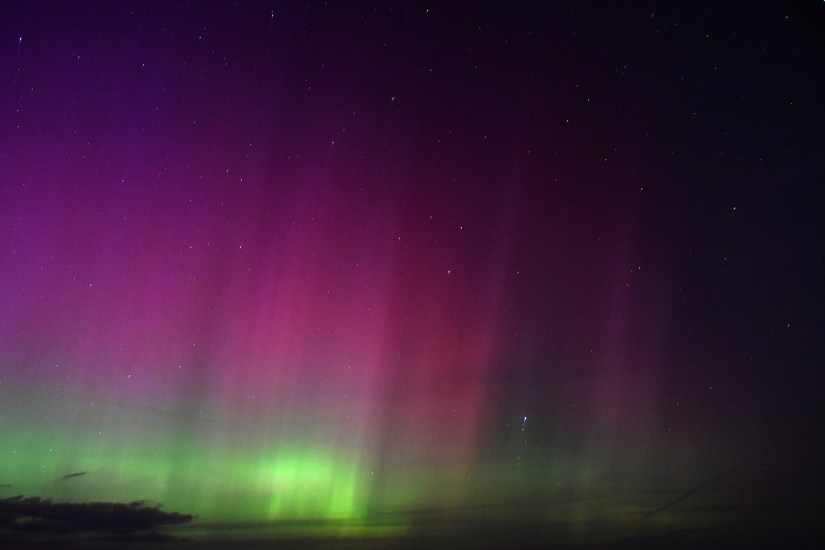

As 10:30pm approached I was thoroughly frozen and the activity was waning. It was hard to drag myself away, but I knew I had to. Once I was home, I scrolled through photos, and struggled to fall asleep as I buzzed with energy from this magical night.
Misconceptions:
- To the naked eye the northern lights look exactly how they look in photos
- The lights to the naked eye will appear white/gray, and maybe light green.
- Give your eyes plenty of time to adjust to the darkness and you’ll be able to pick them out better.
- They will be directly overhead in lower latitudes
- At a latitude similar to Cheyenne, they will be towards the northern horizon. Unless you hit a KP8 goldmine, then expect a bit slightly overhead
- The arctic latitudes, such as Iceland and Alaska, is where you will find them playing right on top of you. This is also truly magical to witness!
- If you really want to feel like you’re in the middle of them, jump on a plane that crosses northern Canada or Greenland (such as flying to Iceland), and sit on the north side of the plane (the left if you face the front of the cabin).
Tips:
- Find a higher elevation spot with a clear view of the north (like a hill)
- Get out of town and away from light pollution
- Take a photo, as a camera (even a newer iPhone), will pick up activity that your eyes may not
- Newer iPhones with night mode are pretty good for photographing the aurora with!
- If using a DSLR, turn off Auto ISO, and select an ISO of 1600-3200. Set manual focus to infinity, and use a tripod to avoid any movement during a long exposure
- There are several apps on the market that can assist with forecasting the lights. I use both AuroraAlerts and AuroraPro (leftovers from my trips to Iceland all those years ago). AuroraAlerts is my preferred app. SpaceWeather.gov is also a great website for information. Their social media is good to follow for updates on approaching CMEs.


 The Adventuring Heidi
Those are great photos. I grew up in northern Sweden (arctic) on the country side and I saw some amazing aurora borealis several times, covering half the sky and of different colors (white, green, purple, reddish).
LikeLiked by 1 person
This is amazing! I’m so bummed I missed it. Incredible photos!
LikeLike