
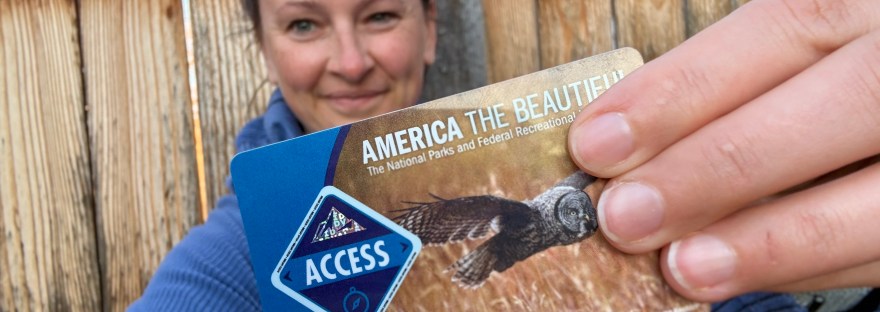
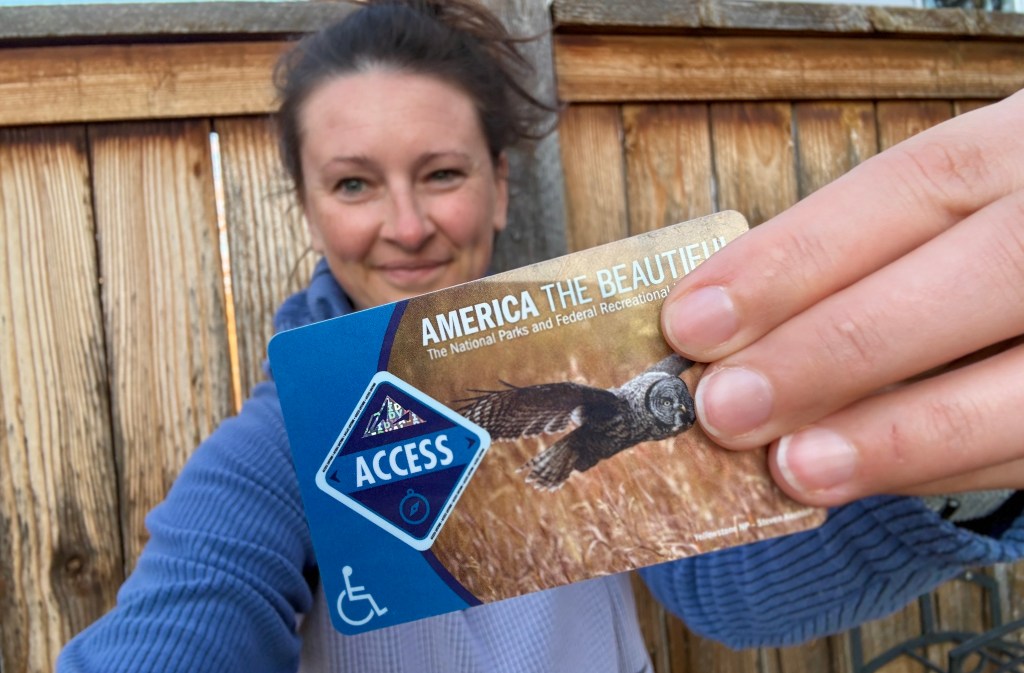
Most people are familiar with the iconic “America the Beautiful” pass—the $80 card that in turn provides “free” access to the United States’ national parks and federal recreational lands. But there is a version of that pass that feels like a “Golden Ticket.” It’s the Access Pass, and for those with permanent disabilities, it is a free, lifetime invitation to explore over 2,000 of our country’s federal recreation sites.
Whether you are a seasoned hiker or a weekend roamer looking for a quiet spot by a lake, this pass is about more than just waiving an entrance fee. It’s a commitment to the idea that the great outdoors belongs to everyone. From deep discounts (50%!!) on campsites to a “plus-one” policy that covers your entire carload of family and friends, the Access Pass removes the barriers between you and the wild.
Who Qualifies for the Access Pass?
One of the biggest misconceptions about the Access Pass is that you need a “100% disability rating” or a visible physical impairment to qualify. That couldn’t be further from the truth. The pass is designed to be inclusive of a wide range of permanent conditions.
1. The Basic Requirements
To be eligible, you must meet two main criteria:
- Citizenship: You must be a U.S. citizen or a permanent legal resident.
- Permanent Disability: You must have a medically determined permanent disability. According to the law, this is an impairment that “substantially limits one or more major life activities” (like walking, seeing, hearing, breathing, or learning).
2. What Conditions are Included?
“Permanent disability” is a broad term. Some examples include (but are not limited to these conditions):
- Physical: Cerebral palsy, multiple sclerosis, or mobility impairments.
- Sensory: Blindness, vision loss, or deafness.
- Chronic Illness: Conditions like type 1 diabetes or severe heart disease.
- Mental & Cognitive: Autism, ADHD, Down syndrome, or certain psychiatric disabilities (like PTSD or severe anxiety).
3. The Paperwork You’ll Need
You don’t need to bring your entire medical file, but you do need one of the following:
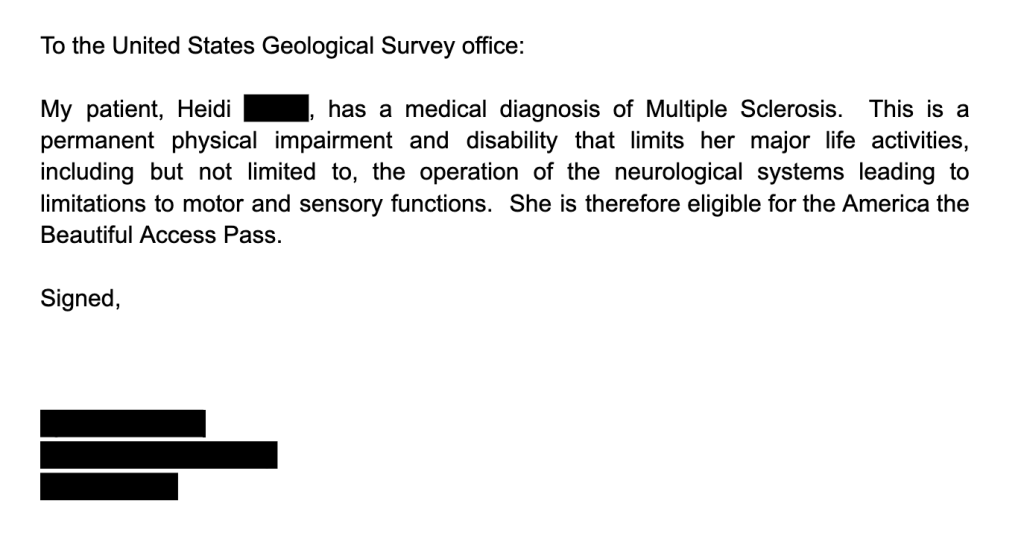
- A Statement Letter: A statement from a licensed healthcare provider stating that you have a permanent disability which limits one or more major life activities (this wording is key, and needs to be included in the letter).
- Federal Agency Documentation: An award letter from the VA (Veterans Affairs) or proof of Social Security Disability Income (SSDI) or Supplemental Security Income (SSI).
- State Agency Documentation: Documentation from a state vocational rehabilitation agency.
Note: A handicap parking placard or a “Notice of Benefit Increase” from Social Security is typically not accepted as documentation.
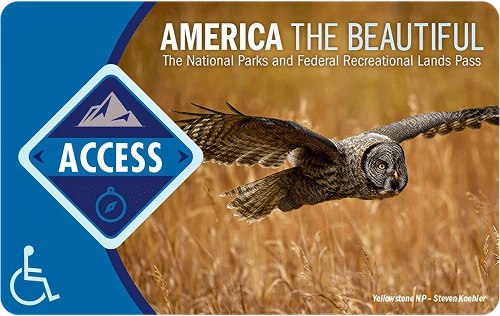
How to Get Your Access Pass: 3 Easy Ways
In the past, you had to wait weeks for a physical card to arrive in the mail. Starting in 2026, a digital option became available, giving you more flexibility than ever.
1. The “Instant” Way: Digital Pass (Recreation.gov)
This is the newest and fastest method outside of obtaining the pass in-person (described below).
- Where: Visit Recreation.gov or use their mobile app.
- Process: You’ll upload your photo ID and your documentation.
- Cost: While the pass itself is free, there is a $7.50 shipping fee if you want a physical pass as well.
- Benefit: Your pass is issued digitally and can be stored in your Apple or Google Wallet immediately.
2. The “Classic” Way: USGS Store
- Where: Order through the USGS Online Store.
- Process: You’ll upload your photo ID and your documentation.
- Cost: White the pass itself is free, you will pay a $12.50 processing and shipping fee.
- Wait Time: This can take anywhere from 2 to 4 weeks, so don’t choose this option if your road trip starts tomorrow!
3. The “Free” Way: In-Person
If you want to avoid the shipping and processing fees and get your physical card for exactly $0 (and get it without waiting 2 to 4 weeks), this is the route for you.
- Where: Visit any federal recreation site that issues passes. This includes most National Parks, many National Forest offices, and Bureau of Land Management (BLM) visitor centers.
- Process: Simply bring your ID and your documentation to the issuing location. They will verify your request and supporting documentation on the spot and hand you your card. You will be asked to sign the card in front of the person issuing it to you.
- Pro-Tip: Not every located can issue passes. Check the NPS Searchable List of sites before you head out.
Important note: When using your pass at an entrance gate, rangers will ask to see a photo ID (like a driver’s license or passport) that matches the name on your digital or physical pass. Make sure you keep both handy! Also, the pass is not valid until you have signed the back. I recommend using a permanent marker to sign it.

The Secret Perk: 50% Off Amenity Fees
While “free entry” gets all the attention, the Access Pass offers a second, even more valuable benefit: deep discounts on expanded amenity fees. For those who spend a lot of time camping on federal lands, this is where the pass truly shines
At most federally-managed sites, the Access Pass provides the pass holder a 50% discount on:
- Individual Campsites: Pitch your tent or park your RV for half the price. Note that this only applies to the site the pass holder is physically occupying.
- Boat Launching & Swimming: If a site charges a fee to get your boat in the water or to use a developed swimming area, your pass usually cuts that cost in half.
- Guided Tours: Many ranger-led tours (like the famous cave tours at Mammoth Cave National Park or cliff dwelling tours at Mesa Verde National Park) offer a 50% discount to the pass holder.
- Specialized Interpretive Services: This includes certain educational programs or specialized facilities within the parks.
What’s the catch?
It is important to know that these discounts apply to federally-operated facilities. If a campsite or activity is run by a private concessionaire (a third-party company), they are not required to honor the discount, though some choose to anyway (such as the campgrounds run by Yellowstone Park Lodges in Yellowstone National Park!). Always check the “Fees & Passes” section of a park’s specific website on NPS.gov to see exactly what is covered! Also, make sure you have your Access Pass entered into your recreation.gov account so any discount is included when booking!
Frequently Asked Questions
Does the pass expire? No. Unlike the standard Annual Pass, the Access Pass is a lifetime pass. Once you have it, you never need to renew it.
Can I use a digital version on my phone? Yes! As of 2026, you can now store your Access Pass in your Apple or Google Wallet via the Recreation.gov app. Just ensure your phone is charged, as rangers will scan the digital code at the gate.
Does it cover everyone in my car? In most cases, yes. At parks that charge “per vehicle,” the pass covers the pass holder and all passengers in a single, non-commercial vehicle. At parks that charge “per person,” it covers the pass holder plus three other adults (children under 16 are always free).
What about motorcycles? New for 2026: A single Access Pass now covers two motorcycles, provided the pass holder is on one of them. This is a great update for those who ride in pairs!
Does it cover “Timed Entry” or “Reservation” fees? No. While the pass covers your entrance fee, many popular parks (like Arches or Rocky Mountain National Parks) require a timed entry reservation. You will still need to book these slots on Recreation.gov and pay the small reservation fee (usually around $2).
What if I lose my physical card? If your physical card is lost or stolen, it cannot be “replaced” for free. You will need to apply for a new one by providing your documentation again. This is why having a digital backup linked to your account is highly recommended! Also, make sure you hang on the documentation you provided to get your initial pass so you do not have to, for example, request a new letter from your healthcare provider.
What are all the types of America the Beautiful pass available? Visit the USGS Store official page for the passes for more information on each type, and to use a handy tool to determine which pass is right for you!
My Experience
There are few perks to having multiple sclerosis (MS) on most days, however, I was quick to jump on to applying for and receiving my Access Pass! I was hooked at 50% off camping, what can I say?!
I had my primary care physician sign my letter. To ease my request, I provided him with a letter already drafted that all he had to do was sign and send back to me through my patient portal. Here is the letter I used:
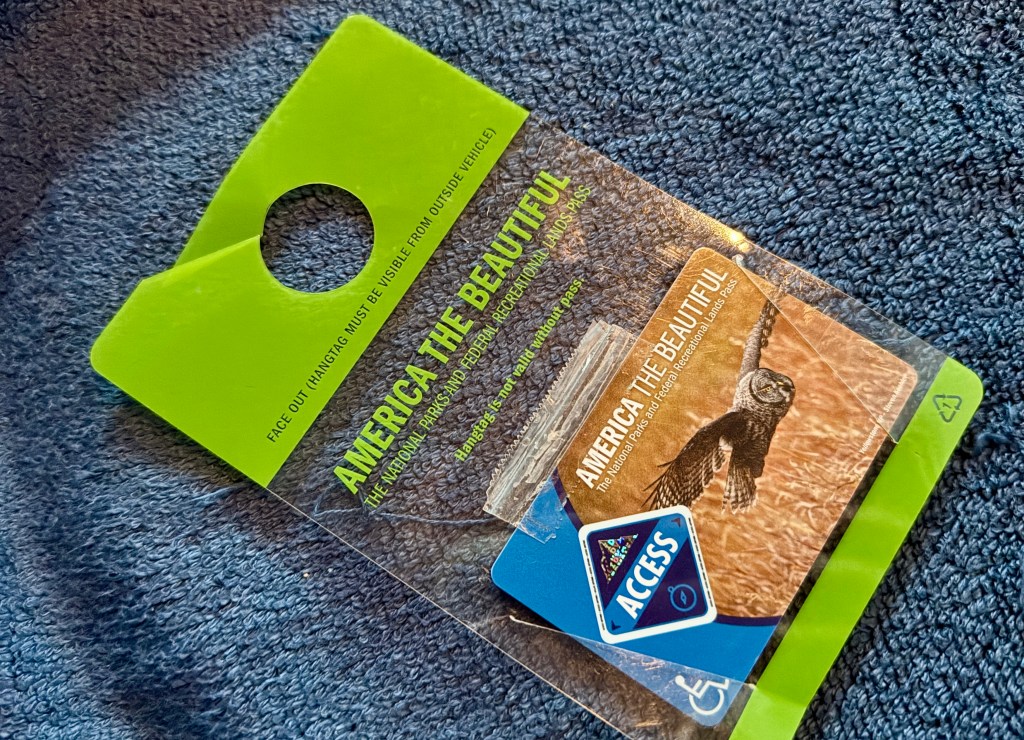
After I had the letter in hand, I headed to my local Bureau of Land Management (BLM) office. This is the location I have always purchased my America the Beautiful passes at. The clerk made a copy of my letter, and gave the original back to me. Within minutes I was issued my pass and asked to sign it in front of the clerk, and was out the door to explore the 2,000+ federal land sites!
The happiest surprise is I was able to able to add my Access Pass to my recreation.gov account and receive 50% refunds on existing camping reservations I had. I was not expecting for the pass to apply retroactively to reservations.
Conclusion: Adventure is Calling
The America the Beautiful Access Pass isn’t just a piece of plastic or a barcode on your phone; it’s a key to some of the most majestic landscapes on Earth. It is a reminder that our public lands are exactly that—public—and they belong to all of us, regardless of the challenges we may face.
So, what are you waiting for? Gather your documents, head to the nearest ranger station (or hop on Recreation.gov), and claim your “Golden Ticket.”

 The Adventuring Heidi
I have to admit I did not know about the Access Pass, but I don’t have a disability. It sounds like a great program. I am so impressed that you are doing so many challenging hikes having MS. I have a few friends with MS so I am familiar with it.
LikeLiked by 1 person
I just try to stay as active as possible! I am lucky that i was diagnosed fairly quickly, and was able to start medication extremely fast which shut down disease symptoms quickly. I still have bad and good days. I’m mostly just too stubborn to let MS keep me down!
LikeLiked by 1 person
It is so impressive that you are so active and working so hard. I wish you all the best.
LikeLiked by 1 person
Thank you!
I am also working hard on messaging that MS is not a death sentence to an active life. I really struggled (and still do) that overall the MS community focuses on the list of things that are deemed impossible for MS patients to do anymore, so just trying to share my adventures as far and wide as I can to show people an active life is still very possible!
LikeLiked by 1 person
Well you are doing an amazing job. I hope I could do not even half of what you are doing and I don’t have MS. Your hikes and your photos are very interesting and very impressive and knowing you have MS even more impressive.
LikeLike